Where autumn settles: a gentler garden journey into winter
Updated:
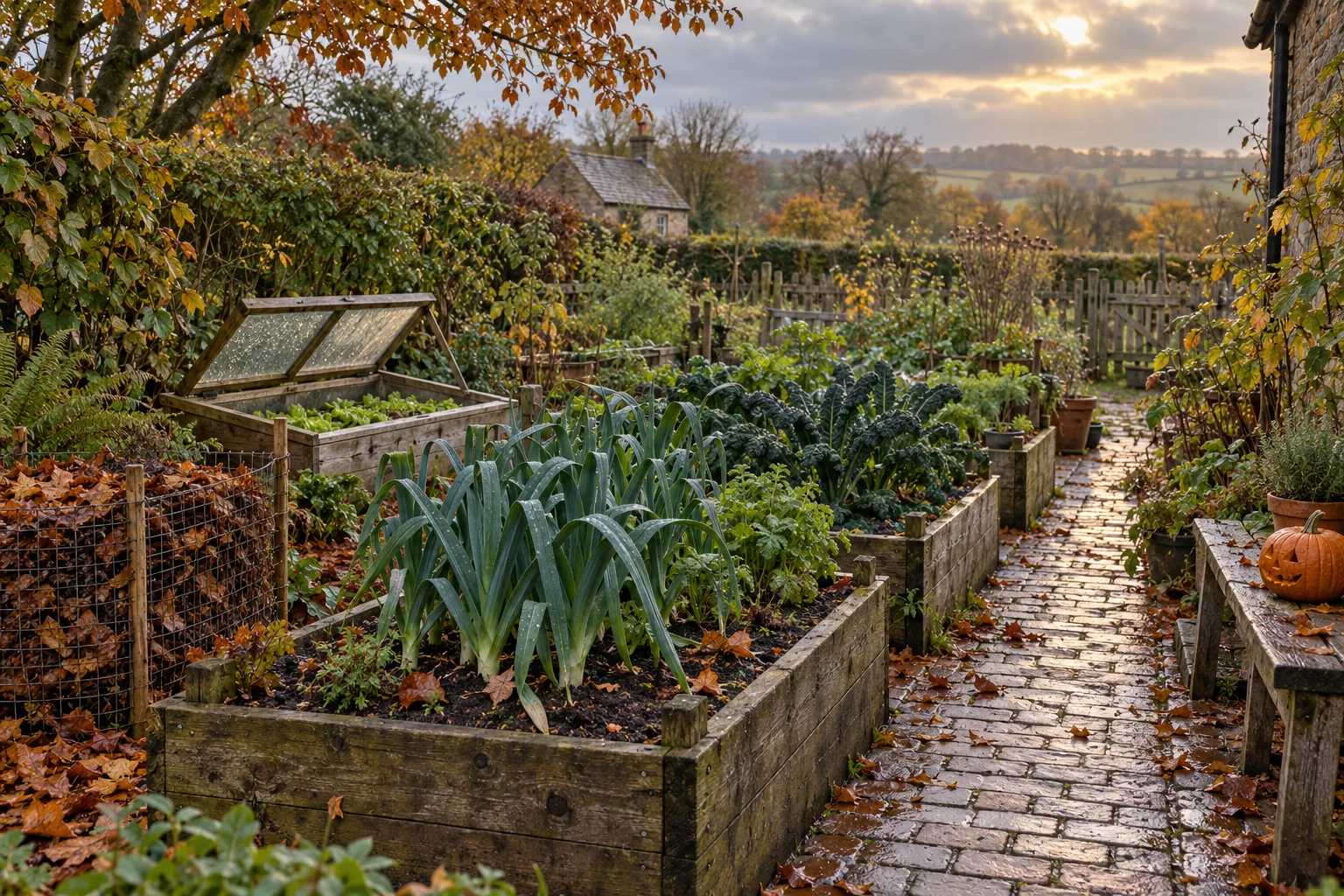
There is a particular sort of gardening afternoon when you arrive with a long list and spend the first ten minutes watching the weather. A shower passes, the hedge lets go of a few more leaves, and the ground beside the shed is wetter than you expected. By the time you reach the vegetable beds, you may already have changed your plans.
In late October, that willingness to adjust is useful. Although the growing season is slowing, there are still harvests to bring in and plants to care for, while some of the most worthwhile work involves leaving things alone. At PermaNatura, we begin with the relationships that make a garden what it is: the soil beneath our feet, the plants we grow, the creatures sharing the space and the time we can give it. Preparing for winter becomes more manageable when those things guide the list.
Let your own patch set the pace
A sheltered garden in southern England may offer possibilities that an exposed northern allotment cannot, even during the same week. Heavy clay, a frost pocket or a coastal wind can matter more than the date on a seed packet. Across cooler parts of northern Europe, the sensible window for outdoor sowing may already have closed.
This guide follows late October through November and the approach to December, rather than predicting this year’s weather in every district. Take a walk after rain, if you can, and look for the places that stay wet, the bed that still catches the sun and the crops that seem comfortable where they are. Those observations will help you decide which jobs deserve attention and which can wait.
A useful destination for all those leaves
If you have ever cleared a path only to find it covered again the next morning, autumn can feel like a rather repetitive conversation with the trees. You need not win it everywhere. Keep slippery paths clear and remove thick layers from the lawn, where they block the light, but allow some healthy leaves to remain beneath a hedge or in a quiet corner.
Where you have room, gather the surplus for leafmould. A ventilated enclosure or suitable container will do, provided the material can stay damp as it breaks down. The RHS guide to leafmould explains how leaves become a useful soil material over time. You are setting something in motion for a later season, so there is no need to keep turning it into another weekly task.
Around the beds, be a little more selective. Small winter crops and vulnerable crowns should not disappear beneath wet mats of leaves, whereas healthy seed heads may be worth keeping for structure and shelter. On a shared allotment, agree where leaves can be stored so that a helpful pile does not become somebody else’s blocked path. In a small garden, a modest tucked-away patch may be all the space you need.
Look after what is growing before you sow something new
There is something reassuring about a row of leeks or a stand of kale when the summer beds have emptied. If you already have established winter crops, begin there: inspect them, harvest what is ready and check any protection after wind or heavy rain. Cold frames need ventilation in mild spells, while fleece must be secured well enough to stay where you put it.
Watering needs a little judgement, too. A container beneath the eaves may be drying out even while the path is wet, whereas another pot could be sitting in a full saucer. Feel below the surface before reaching for the watering can, and check that excess water has somewhere to go.
If you would like to sow broad beans, choose a hardy variety and consider how sheltered and well drained the site really is. In suitable English gardens, autumn sowing can be worthwhile; on cold, wet or exposed ground, waiting may make more sense. The RHS comparison of autumn and spring sowing is helpful when weighing that choice. Either way, you are planning for the following growing season, rather than filling a gap in this winter’s meals.
November can also bring the opportunity to plant a deciduous hedge or fruit tree, provided the ground is suitable. As the RHS tree and shrub guidance explains, planting should wait if the soil is frozen or waterlogged. If your boots are sinking into the bed, there are better jobs for that afternoon than forcing a new tree into it.
What a lantern can invite us to remember
Around Halloween, the garden often finds its way back into family life through a pumpkin on the doorstep or something warm cooking in the kitchen. Once the carving is finished, you might find there is time to talk about the year’s harvest, or about the person who first taught you to grow something.
The season has long carried associations with gathering, remembering and the approach of winter. In Irish tradition, Samhain marked the first day of winter on 1 November, with celebrations beginning the evening before. The National Museum of Ireland’s account of Halloween and Samhain offers a grounded way into that history. Later religious and social customs have also shaped Halloween, so it is worth making room for the differences rather than imagining one unchanged ancient festival across northern Europe.
You do not need an elaborate ceremony to mark the turn of the year in your own garden. A shared meal, a remembered gardening tip or a leaf that a child chooses to draw can be enough. Such moments can help us pay attention; they do not establish special effects on the soil or crops. The practical decisions still depend on the place, its weather and the plants in front of us.
Choose reusable decorations and an LED lantern, then remove the decorations when you are finished. Suitable untreated pumpkin remains can go into an appropriate compost system once wax and fittings have been taken out, rather than being left in a wildlife corner or dumped in the countryside. If you are planning a seasonal bonfire, build it shortly before use and check carefully for sheltering animals before lighting it.
Leave yourself a few manageable jobs
| When | Something worth making time for |
|---|---|
| Late October | Bring in usable harvests, clear slippery paths and check container drainage |
| November | Gather leaves, inspect winter crops and plant only when the ground is suitable |
| Before hard frost | Secure covers, protect vulnerable pots and prepare outdoor water systems according to their instructions |
On a balcony, caring for the pots you already have may be plenty. In an allotment group, sharing the job of checking covers after storms can make the winter easier for everyone. As you work, leave healthy standing growth where it suits the garden, rather than cutting everything back because the calendar has moved on.
Keep a few notes in the PermaNatura garden planner: what grew in each bed, what you changed and what you would like to look at again in spring. You may discover that the most useful entry is a small observation you would otherwise have forgotten. And on the afternoons when the soil is too wet to work, there is still room to look around, gather a little dinner and head home before the next shower.
Seasonal reference: 29 October 2026. Adapt to local weather, exposure and varieties. Cover image generated with AI as a seasonal illustration, rather than a photograph of a documented garden.