Starting and Caring for Tomatoes: From Seed to a Rich Harvest
Updated:
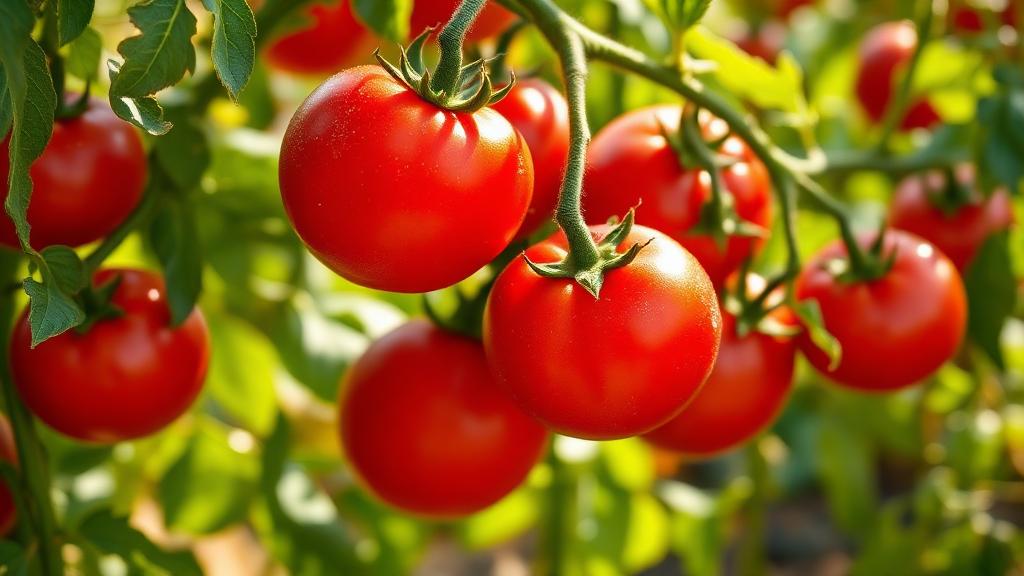
Starting and Caring for Tomatoes – From Seed to a Rich Harvest
Tomatoes are Germany's most popular vegetable plant – and also the plant where hobby gardeners make the most mistakes. With the right knowledge, you can harvest aromatic fruit continuously from July to October, from the balcony or the garden bed.
Choosing Varieties – the Foundation of Success
| Type | Example | Location | Special feature |
|---|---|---|---|
| Cocktail | Sungold, Black Cherry | pot, bed, balcony | very sweet, robust |
| Beefsteak | Oxheart, Marmande | bed, greenhouse | for salads, soups |
| Bush/staked | Harzfeuer, Matina | bed, pot from 30 L | classic size |
| Wild/bush tomato | Rote Murmel, Golden Currant | pot, hanging basket | very robust, no pinching out |
| Outdoor-hardy | Resi, De Berao | open ground | late-blight tolerant |
💡 Beginner's tip: Start with 'Resi', 'Sungold' or 'Philovita' – late-blight tolerant, high-yielding, reliable.
The 2026 Sowing Calendar
| Time | Action | Location |
|---|---|---|
| Mid/late February | sowing (early varieties, greenhouse) | 22–24 °C, windowsill |
| Mid-March | sowing (standard) | bright, 20 °C |
| Early April | pricking out (1st true pair of leaves) | individual pots 10 cm |
| Mid-May | hardening off (outside during the day) | sheltered spot |
| After the Ice Saints (May 15) | planting out into the open | min. 12 °C soil temperature |
Raising Seedlings – the 7 Decisive Rules
- Sowing depth 0.5–1 cm – tomatoes are tolerant of light germination, but cover thinly
- Germination temperature 22–24 °C – a heat mat speeds up germination to 6–8 days
- Light from germination on – otherwise long, thin, unstable shoots ("etiolation")
- Prick out as soon as the 1st pair of leaves appears – set deep, up to the cotyledons
- Fertilize only from the 4th pair of leaves – weakly, weekly (nettle slurry 1:20)
- Turn the pots every 2 days – for even growth
- Harden off 7–10 days before planting out – gradually accustom to sun and wind
Planting Out – How to Do It Right
- Location: full sun, sheltered from rain (e.g. tomato roof), low wind
- Soil: humus-rich, deep, pH 6.0–6.8
- Planting distance: staked tomatoes 70 × 70 cm, bush tomatoes 50 × 50 cm
- Plant deep: stem ⅓ into the soil – forms additional roots
- Set support immediately: spiral stake or string from the greenhouse roof
Watering, Fertilizing, Mulching
| Action | Recommendation |
|---|---|
| Watering | in the morning, near the soil, never over the leaves |
| Water quantity | in midsummer 1–2 L per plant and day |
| Mulching | with straw or grass clippings – prevents splashing water |
| Fertilizing | every 14 days organically (sheep's wool, horn shavings, nettle) |
| Potassium boost | from July additionally wood ash or patent potash |
💡 Tip: Wet leaves = risk of late blight. A simple tomato roof made of film extends the season by 4–6 weeks.
Pinching Out – Yes or No?
- Staked tomatoes: ✅ remove side shoots (in the leaf axils) weekly
- Bush tomatoes / wild tomatoes: ❌ do not pinch out
- Limit height: from early August, cap the tip ("topping") so the fruit can ripen
The 5 Most Common Problems
| Symptom | Cause | Solution |
|---|---|---|
| Brown spots on leaves | late blight (Phytophthora) | roof, spacing, remove affected leaves immediately |
| Black base on the fruit | blossom-end rot (calcium deficiency) | water evenly, algal lime |
| Cracks in the fruit | irregular watering | mulching, even water supply |
| Yellow lower leaves | nitrogen deficiency or normal loss | nettle slurry, remove lower leaves |
| Few fruits | too little sun / no pollinator | sunny location, shake plants gently in the morning |
Harvest and Storage
- Harvest when fruit is fully colored – pick with the stem base
- Store at 12–18 °C, never in the fridge (loss of aroma)
- Green tomatoes can ripen with an apple in a dark room
Saving Your Own Seed
For open-pollinated varieties (not F1): halve the fruit, ferment the seeds with their gel for 3 days in water, rinse, dry, label. This way you secure your favorite variety for the next season – free of charge.
Conclusion
With the right variety, a rain-sheltered location and even watering, even beginners harvest 5–10 kg of tomatoes per plant. Invest in quality rather than quantity – 4 well-cared-for plants yield more than 10 neglected ones.
💡 PermaNatura practical tip: Set up your tomatoes as their own bed, activate the "Pinch out weekly" reminder and record harvest quantities for the variety comparison in the following season.
Sources: VEN (Association for the Preservation of Crop Plant Diversity), Bavarian State Institute for Viticulture and Horticulture, practical experience of biodynamic nurseries.