Score
Companion-planting harmony
Rule-based companion-planting guidance directly in your bed plan, based on the plant relationships in the catalogue.
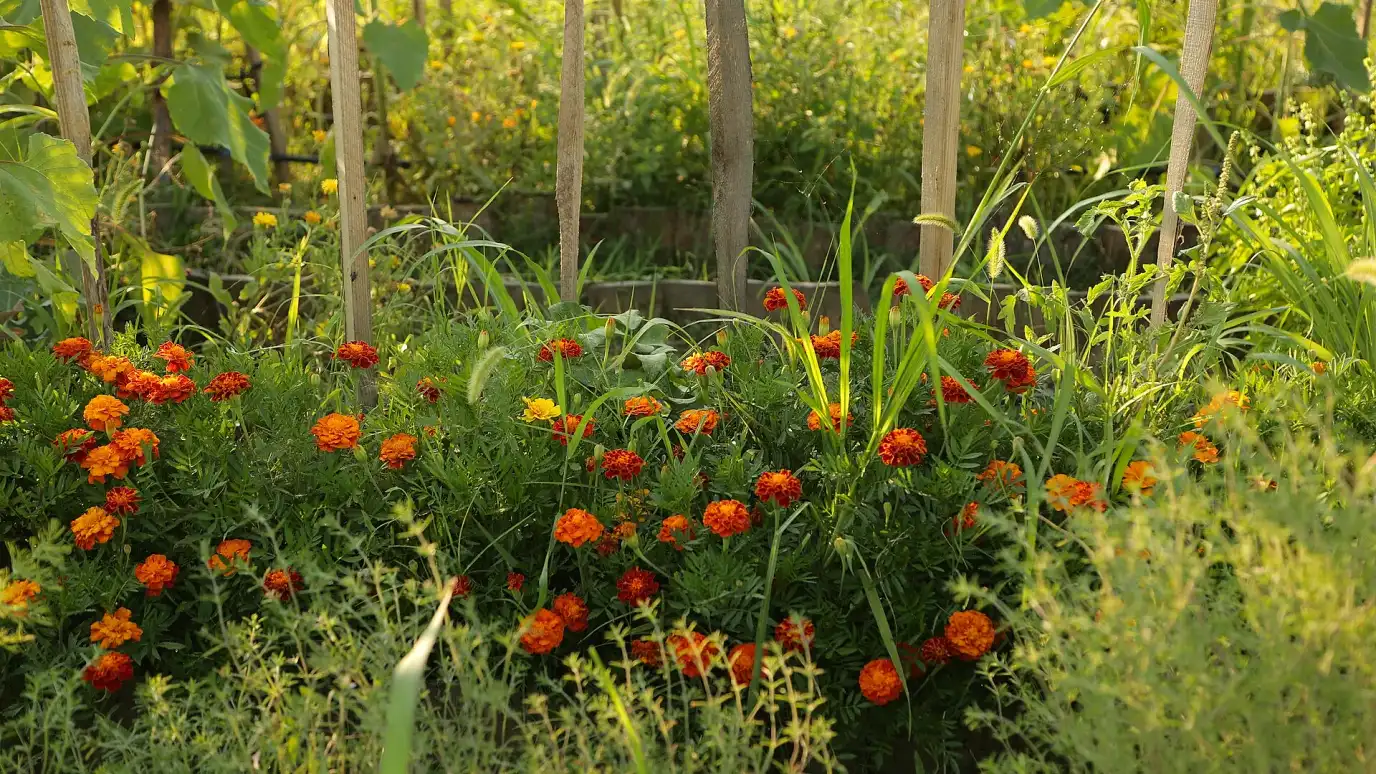
From soil and zones to your stores: PermaNatura keeps your place together over years. Care, rotation, observations and traditional knowledge, clearly named as such.
Your week in the cycle
Permaculture is work over years. PermaNatura remembers what you do so the next season can build on it.
For everyone who wants to garden sustainably and is looking for practical guidance: living soils, healthy plants, meaningful cycles and real self-sufficiency.
Living earth instead of depletion: companion planting, crop rotation and green manure keep your soil fertile – year after year.
Hildegard von Bingen, lunar rhythm, monastery gardens – handed-down experience in the knowledge hub, next to your own observations, weather and soil data.
From your first raised bed to a living ecosystem that makes you a little more independent step by step.
How PermaNatura works
Permaculture starts with observation. PermaNatura keeps zones, beds, care and experience together in one place – over many years.
Understand the place
Read soil, weather and protected areas, set zones on the map.
Plan
Plan companion planting and crop rotation over several years.
Act
Care cycles such as mulching or pruning as recurring tasks.
Record
Link observations, identified plants and harvests to the place.
Compare
See how harvests and care develop from season to season.
From the house to the wilderness – design your areas with the proven Mollison zone model. On the precision map every bed sits in its zone.
For ecological planners, meaning, soil fertility and self-efficacy matter – PermaNatura turns them into concrete next steps.
Rule-based companion-planting guidance directly in your bed plan, based on the plant relationships in the catalogue.
Fruit, root, leaf and flower days. Plan biodynamically with the traditional sowing calendar.
Derive a suggestion for next year from a bed's planting: heavy, medium and light feeders in turn for long-term soil fertility.
Get to know wild herbs: understand their features and look-alike risks – with photos and recipes.
Guides for calendula salve, ribwort cough syrup, St John's wort oil and more.
Hildegard of Bingen, biodynamic preparations and time-honoured wisdom – modernly presented.
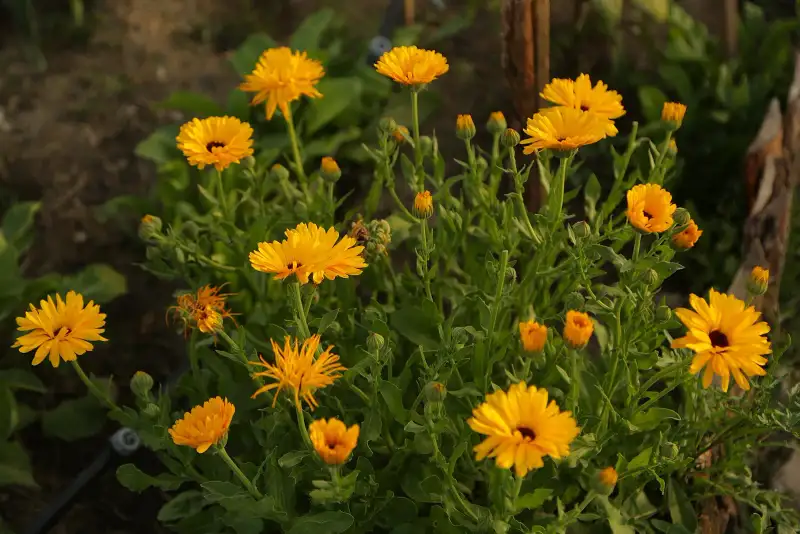
Step-by-step recipes: from calendula salve to ribwort syrup. Traditional monastery knowledge, clearly explained – it is no substitute for medical or pharmaceutical advice.

Get to know wild herbs: understand their features and look-alike risks – with photos and recipes. From wild garlic to ground elder.
Observe nature. Understand connections.
Every soil tells a different story. The precision map connects your plots with soil models, weather and optional sensor readings, bringing individual data into context for your next decision.
Model values do not replace a soil test. Sensors are optional; the map works without them.
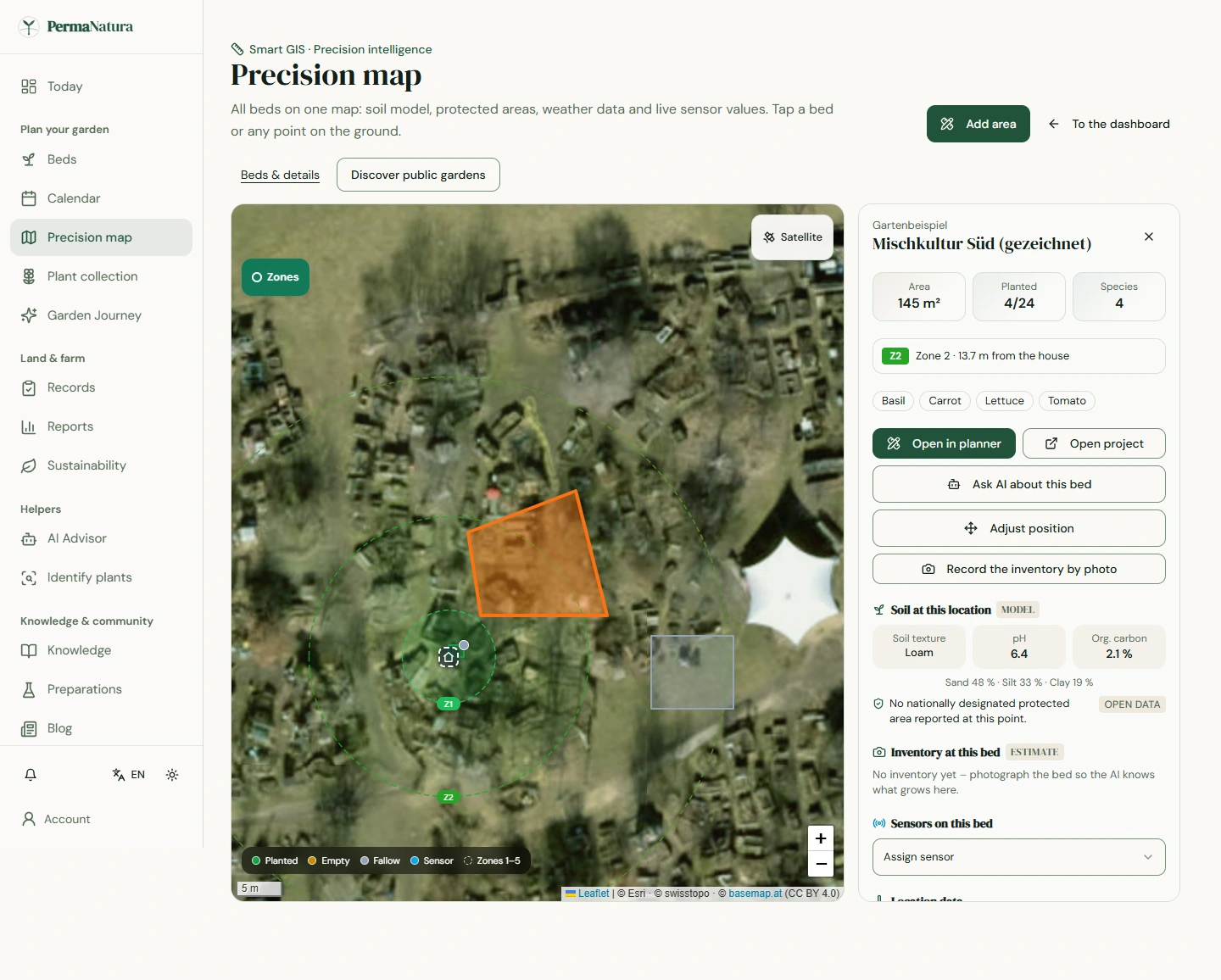
Captured from the real application using isolated example data. Areas and values illustrate an example, not measurements of your garden.
View the full-size product captureDiversity begins with relationships. Explore a design and see how planning and observation complement each other.
Explore the app with an exampleNo account needed · explore at your own pace · sample data
Understand the place
Location, soil, weather and protected areas: every project starts with the place where it grows.
Plan
Design beds and fields, check companion planting and crop rotation, think measures ahead over years.
Act
Tasks with a date, a repeat and a person responsible. The reminder reaches whoever does the work.
Record
Sowing, care and harvest in the diary. What was done stays with the place.
Compare
See this season next to the last and turn it into the next plan.
Editorial model projects with example data. No customer data or measured environmental outcomes.
PermaNatura grows with its users. Start free now, help shape the future of the app and enjoy exclusive perks as an early adopter.
For permaculture groups and community gardens: you plus 5 members, 250 AI requests/month and up to 20 projects & 100 beds.
Zones 0 to 5, defined by Bill Mollison, organise space by how much care it needs: Zone 0 is the home, Zone 1 the intensively used kitchen garden, Zone 5 untouched wilderness. PermaNatura visualises them interactively for your garden.
No. Permaculture principles work from a balcony to a raised bed to a hectare – what matters is the design, not the size.
With interactive zone visualisation, companion-planting harmony analysis, crop-rotation suggestions and an AI advisor that factors in permaculture and biodynamic principles.
Organic mainly describes avoiding synthetic chemical inputs. Permaculture is a holistic design system aiming for self-sustaining cycles and stacked functions.
A multi-layered growing area that mimics a natural forest ecosystem – from fruit trees and berry shrubs to ground covers and root crops.
Yes. Zone visualisation and companion-planting analysis are already included in the free Basic plan.
Start with companion planting: pair vegetables that help each other and keep incompatible ones apart. PermaNatura scores the companion harmony of your bed plan in real time and suggests the best neighbours for every plant.
It depends on the plant type: fruit, root, leaf and flower crops follow different moon phases and days. PermaNatura's lunar calendar shows the favourable windows for sowing, planting and harvesting each day, matched to the crop.
Start for free – companion-planting plan, moon calendar and garden journal included. No subscription needed, no ads, no selling of data.
Start for free now