Philosophy

    What lasts grows along.

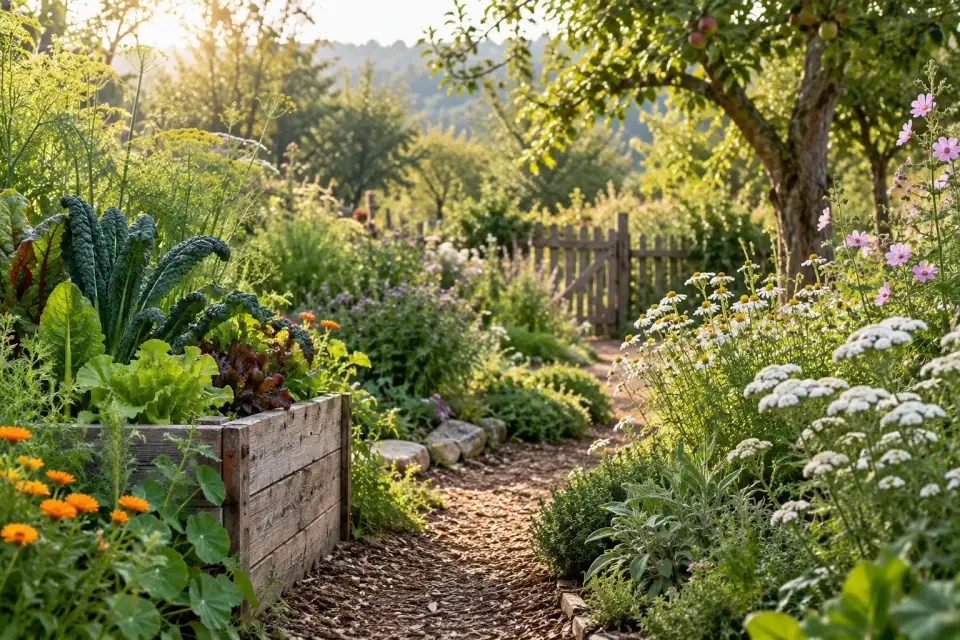
    PermaNatura is more than a name. It joins two Latin roots into one attitude: permanence does not come from holding on, but from moving with what is alive.

    Two words, one attitude

    Perma

    from Latin permanere – to remain, to endure

    Perma stands for what sustains: soil that grows more fertile over generations, knowledge that is passed on, cycles that close. In the 1970s Bill Mollison and David Holmgren named permaculture after “permanent agriculture” – a way of farming that can last.

    Natura

    from Latin nasci – to be born

    Natura originally means not a thing but a process: that which keeps coming into being. Nature is not a stock we manage but a becoming we take part in – in the sprouting seed, in the turning seasons, in the rhythm of the moon.

    Permanence through becoming

    Together the two words form an apparent paradox: what may change is what endures. A garden stays fertile not because it stays the same, but because every year it grows, decays and returns anew.

    Hildegard of Bingen called the life force flowing through everything green viriditas – greening power. In that spirit we see gardening as working with something larger: we sow, observe, harvest and give back.

    Lasting. With nature.

    Where we are heading

    Places that are better understood with every season, because observation, plan and experience stay together. Not more technology in the garden, but more attention for it. The app should send you outside, not keep you in.

    Two kinds of knowledge, kept apart

    Handed down

    Moon calendar, monastery gardens, farmers' sayings: as orientation and a bond with the year, explicitly named as tradition.

    Measured and modelled

    Weather, soil and your own observations: with a source, and with a note when data is missing.

    What sustains us

    Three principles from permaculture

    Earth care

    Soil, water and diversity are the basis of all life. We plan so that they grow instead of shrinking.

    People care

    A garden nourishes body and soul. Gardening should become easier, more joyful and more shared.

    Fair share

    Return the surplus – to the soil, to neighbours, to future generations – and take only what we need.

    From attitude to practice

    How the philosophy lives in the app

    Observe first, then act

    Location, soil, weather and your notes are the basis of every recommendation.

    Diversity, not monoculture

    The companion-planting analysis shows which plants strengthen each other and which clash.

    Close the cycles

    Crop rotation, compost and green manure keep the soil alive, year after year.

    In nature’s rhythm

    Seasonal and moon calendars connect traditional knowledge with your gardening year.

    Keep knowledge alive

    Traditional knowledge from Hildegard to biodynamics sits next to current research – clearly marked as tradition.

    Technology that serves

    The AI advises, you decide. Ad-free, no data selling, data stored in Europe.

    From Beetmanager to PermaNatura

    It all began with a bed planner. Over time it became a tool for whole gardens, farms and landscapes – and the old name became too narrow. PermaNatura says what it was about from the start: gardens that last because they grow with nature.

    Frequently asked

    Questions about the name and philosophy

    What does the name PermaNatura mean?

    PermaNatura joins Perma, from Latin permanere (to remain), with Natura, from nasci (to be born). It stands for gardening that sustains for the long term because it works with natural cycles instead of against them.

    Is PermaNatura related to permaculture?

    Yes. The word permaculture goes back to “permanent agriculture”. PermaNatura adopts its three ethics – earth care, people care, fair share – and makes them plannable day to day: from companion planting and crop rotation to zones and cycles.

    Why was PermaNatura formerly called Beetmanager?

    The app began as a bed planner. Today it plans gardens, permaculture sites and organic farms. The new name describes that attitude better. Accounts, data and features stay unchanged.

    Is PermaNatura spiritual or scientific?

    There is room for both, clearly separated. Recommendations on companion planting, soil and rotation rest on horticultural expertise and research. Traditional knowledge such as the moon calendar or biodynamic preparations is shown as tradition – to try and observe, not as a promise.

    Still have a question? Get in touch

    Start a garden that lasts

    Plan your first bed with PermaNatura – free and without a credit card.