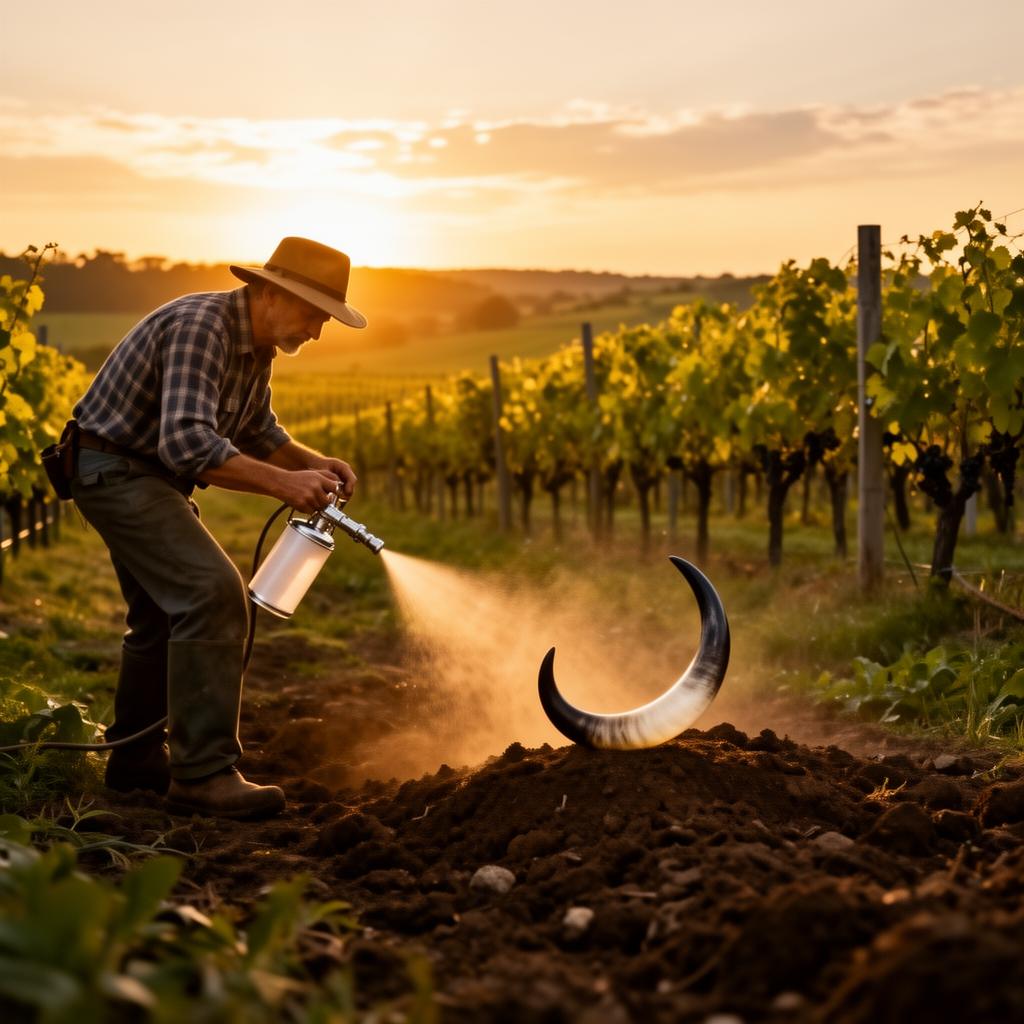
Demeter Certification: The Practical Guide for Biodynamic Farms
Demeter Certification 2026 – The Practical Guide for Biodynamic Farms
The Demeter certification is the strictest organic label in Europe. It goes far beyond the EU Organic Regulation and commits farms to a holistic, biodynamic way of farming based on the suggestions of Rudolf Steiner.
This guide shows you step by step what the conversion costs, how long it takes and which requirements are truly relevant in 2026.
Demeter vs. EU Organic – the most important differences
| Criterion | EU Organic (Reg. 2018/848) | Demeter |
|---|---|---|
| Animal husbandry | organic-compliant | own animals mandatory (manure cycle) |
| Preparations | not prescribed | 8 biodynamic preparations mandatory |
| Seed | organic preferred | 100% organic / open-pollinated |
| Cow horns | dehorning permitted | horns remain |
| Farm organism | not prescribed | holistic mandatory |
| Conversion period | 2–3 years | 3 years + annual inspections |
| Purchased feed | up to 30% | max. 20%, of which ⅔ Demeter |
The 8 biodynamic preparations
These preparations are the heart of the Demeter way of farming and must be applied and documented annually:
- Horn manure (500) – soil vitalisation, spring/autumn
- Horn silica (501) – light forces, growing season
- Yarrow (502) – compost preparation, sulphur
- Chamomile (503) – compost preparation, calcium
- Stinging nettle (504) – compost preparation, iron
- Oak bark (505) – compost preparation, calcium
- Dandelion (506) – compost preparation, silicic acid
- Valerian (507) – compost preparation, phosphorus
💡 Tip: You can obtain ready-made preparations from the Demeter association or produce them yourself – both are subject to documentation requirements.
Step by step: how the certification works
Phase 1 – Preparation (3–6 months)
- Initial consultation with a Demeter advisor
- Farm analysis: areas, animals, crop rotation, marketing
- Drawing up a farm development plan
Phase 2 – Conversion (3 years)
- Year 1: "in conversion to Demeter"
- Year 2: still conversion goods
- Year 3: marketing as "Demeter in conversion"
- From year 4: full Demeter marketing
Phase 3 – Annual inspection
- External inspection by an approved organic control body
- Additional Demeter recognition negotiation
- Complete records of all measures, preparations, livestock numbers
Costs – realistic calculation
| Item | Small farm (5 ha) | Medium farm (30 ha) |
|---|---|---|
| Initial inspection | €800–1,200 | €1,500–2,500 |
| Annual organic inspection | €400–700 | €900–1,800 |
| Demeter contribution | approx. €350 | approx. €1,200 |
| Preparations (purchased) | approx. €150 | approx. €400 |
| Consulting (optional) | €600–1,500 | €1,500–4,000 |
| Total year 1 | ~€2,800 | ~€7,500 |
💡 Funding: In Germany and Austria, conversion costs are partly subsidised under the CAP organic scheme (up to 70% for the initial inspection possible).
Mandatory documentation 2026
Demeter requires more records than the EU Organic Regulation. Typical examples are:
- Field record (Schlagkartei) with all measures (sowing date, preparation, lunar phase optional)
- Livestock register with births, sales, veterinary visits
- Preparations register with source, application date, area
- Seed proof (open-pollinated, organic, ideally Demeter)
- Manure balance (own animals → own fertilisation)
Common pitfalls
| Problem | Consequence | Solution |
|---|---|---|
| Conventional seed | rejection of the batch | only Demeter/organic seed |
| Missing preparation application | non-recognition | at least 1× per season |
| Too few own animals | conditions imposed | min. 0.2 LU/ha (animal husbandry obligation) |
| Conventionally purchased hay | sanction | proof of organic/Demeter origin |
Advantages in marketing
Demeter products achieve 20–40% higher prices than EU organic. Important sales channels:
- Specialist organic retail (Alnatura, Denn's, health food stores)
- Farm shops and Demeter market stalls
- Demeter direct marketing via box schemes
- Large-scale catering with an organic quota (canteens, hospitals)
Conclusion
Demeter certification is demanding but economically attractive. Those who live the holistic approach benefit from premium prices, loyal customers and a closed farm cycle.
💡 Practical tip PermaNatura Profi: Use the field record with the preparations module to document all 8 biodynamic preparations in an inspection-compliant way – including lunar phase notes and PDF export for the Demeter inspection.
Sources: Demeter e.V. guidelines 2026, EU Regulation 2018/848, Research Ring for Biodynamic Agriculture.
Comments (0)
Sign in to comment.
📖 You might also like
GAEC Conditionality 2026: What Farms Need to Know Now
The GAEC standards for 2026 bring simplifications, but also new obligations. We show which requirements apply and how PermaNatura helps with implementation.
Read more
Regulation (EU) 2018/848: Documentation Without Paper Chaos
The EU Organic Regulation places high demands on documentation. Here is how farms master these challenges with a digital field record.
Read more
Digital Field Records: Why Excel Is No Longer Enough
From Excel lists to intelligent farm management: how a digital field record saves time, avoids errors and simplifies farm inspections.
Read more