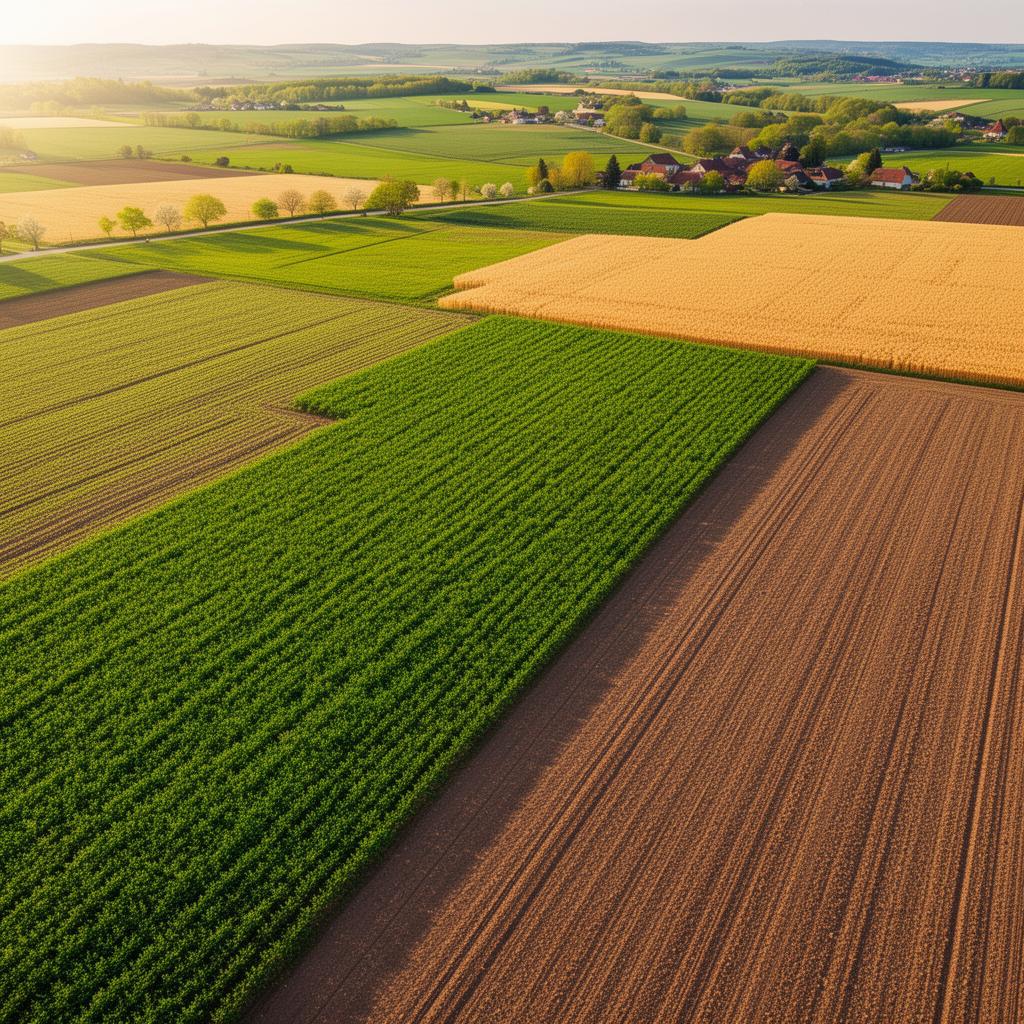
GAEC Conditionality 2026: What Farms Need to Know Now
GAEC Conditionality 2026 – All Requirements for Farms
The standards for Good Agricultural and Environmental Conditions (GAEC, German: GLÖZ) are key prerequisites for receiving EU direct payments. From 2026, stricter requirements apply that affect every farm.
What is GAEC?
GAEC stands for the minimum standards that agricultural holdings must meet in order to receive direct payments under the Common Agricultural Policy (CAP). Breaches lead to reductions of 1–100% of the payments.
The 9 GAEC Standards at a Glance
| Standard | Designation | Core Requirement |
|---|---|---|
| GAEC 1 | Permanent grassland | Grassland share may decrease by max. 5% |
| GAEC 2 | Wetlands/peatlands | Protection of carbon-rich soils |
| GAEC 3 | Stubble fields | Ban on burning |
| GAEC 4 | Watercourse buffer strips | Min. 3 m untreated buffer strips |
| GAEC 5 | Erosion protection | Slope-dependent management |
| GAEC 6 | Soil cover | Minimum soil cover during winter months |
| GAEC 7 | Crop diversity | Min. 2–3 crops depending on farm size |
| GAEC 8 | Non-productive areas | 4% set-aside from 2026 |
| GAEC 9 | Environmentally sensitive grassland | Conversion ban in Natura 2000 |
GAEC 8 in Detail – The Set-Aside Obligation
From 2026, the full set-aside obligation of 4% of arable land applies:
What counts as non-productive area?
- Fallow land (no cultivation, no plant protection)
- Landscape features (hedges, rows of trees, field margins)
- Buffer strips along watercourses
- Flower strips (without harvest)
What does NOT count?
- Catch crops (these fall under GAEC 6)
- Legumes (no longer eligible since 2026!)
- Short-rotation coppice
- Areas where plant protection products are used
💡 Caution: The exemption rule for legume eligibility from 2023/2024 has expired. From 2026, the strict 4% set-aside applies again.
GAEC 7 – Crop Diversity by Farm Size
| Arable Land | Requirement |
|---|---|
| Under 10 ha | No obligation |
| 10–30 ha | Min. 2 different crops, main crop max. 75% |
| Over 30 ha | Min. 3 different crops, main crop max. 75%, two main crops max. 95% |
GAEC 6 – Soil Cover in Winter
The minimum soil cover applies from 15 November to 15 January:
- Permitted methods: catch crops, undersowing, stubble, mulch
- Affects at least 80% of the arable land
- Exceptions for heavy soils after late harvest (application required)
Practical Checklist for 2026
Before sowing (January–March)
- Update the field register
- Define set-aside areas (4%)
- Create a crop rotation plan (GAEC 7)
- Plan erosion protection measures (GAEC 5)
During the season (April–October)
- Maintain watercourse buffer strips (3 m)
- Refrain from plant protection on set-aside areas
- Keep documentation of all measures
- Prepare the soil cover plan for winter
After the harvest (October–December)
- Establish winter cover (GAEC 6)
- Document stubble management
- Prepare the area balance
- Prepare the compliance report
Sanctions for Breaches
| Severity | Reduction | Example |
|---|---|---|
| Minor | 1–3% | Incomplete documentation |
| Moderate | 3–5% | Falling short of the set-aside quota |
| Serious | 15–20% | Water pollution |
| Intentional | 20–100% | Knowingly burning stubble |
Digital Support from PermaNatura
PermaNatura Pro helps with GAEC compliance:
- Automatic set-aside calculation: Mark beds as fallow – the percentage is calculated automatically
- Crop rotation tracking: GAEC 7 compliance is checked via crop diversity
- Audit centre: A clear scorecard shows the degree of compliance with all standards
- Measures export: Documentation for inspection authorities as a PDF
💡 Tip: Use the audit function regularly to identify gaps early – not just shortly before the inspection.
Comments (0)
Sign in to comment.
📖 You might also like
Regulation (EU) 2018/848: Documentation Without Paper Chaos
The EU Organic Regulation places high demands on documentation. Here is how farms master these challenges with a digital field record.
Read more
Digital Field Records: Why Excel Is No Longer Enough
From Excel lists to intelligent farm management: how a digital field record saves time, avoids errors and simplifies farm inspections.
Read more
Demeter Certification: The Practical Guide for Biodynamic Farms
From horn manure to lunar calendar: what Demeter farms need to consider for certification and how digital documentation simplifies the process.
Read more