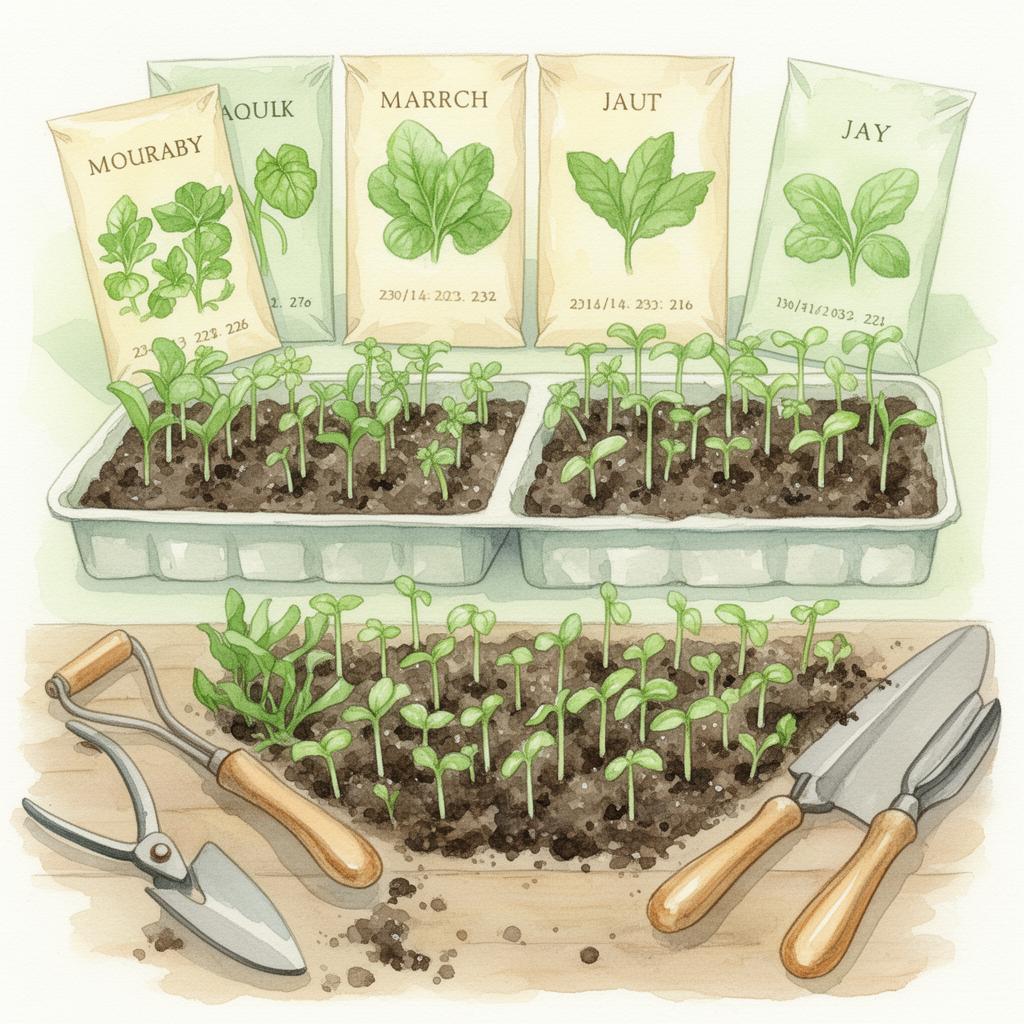
Sowing Calendar 2026: Month by Month to a Full Harvest
Your Roadmap for a Successful Gardening Year
The right timing determines success or failure in vegetable growing. Sown too early, the seedlings freeze; sown too late, you miss the optimal growth phase. This calendar gives you concrete recommendations for every month.
🥶 January: Planning and Preparation
Outdoors: Still too cold for sowing (exception: winter purslane in the cold frame)
Indoors / At the desk:
- Sort through and order seeds
- Create a bed plan (ideal: with PermaNatura)
- Turn the compost
- Service and sharpen garden tools
Tip: Order seeds early - popular varieties often sell out quickly!
❄️ February: Pre-Cultivation Begins
On the windowsill (from mid-February):
- 🌶️ Peppers and chili (need a long pre-cultivation time!)
- 🍆 Eggplant
- 🌿 Celery
In the cold frame / greenhouse:
- Sow more lamb's lettuce
- First radishes under fleece
Temperatures: Mind the germination temperature! Peppers need 22-25 °C.
🌱 March: The Start on the Windowsill
Pre-cultivation indoors:
- 🍅 Tomatoes (from mid-March)
- 🥒 Cucumbers (end of March)
- 🥬 Kohlrabi, cauliflower, broccoli
- 🌻 Sunflowers
- 🌿 Basil, parsley
Direct sowing outdoors (from mid-March, depending on the region):
- Carrots (early varieties)
- Spinach
- Peas
- Onions (sets)
- Radishes
Important: Wait for the Ice Saints (mid-May) before frost-sensitive plants go outside!
🌸 April: Peak Season for Sowing
Pre-cultivation:
- Zucchini and squash (from mid-April)
- Corn
- Beans (pre-sprouting in a moist cloth)
Direct sowing outdoors:
- Chard
- Beetroot
- Cut-and-come-again lettuce (resow every 2 weeks!)
- Dill, coriander
- Plant potatoes (from a soil temperature of 8 °C)
In the garden:
- Spread compost on the beds
- Renew the mulch layer
- Set up slug barriers
🌿 May: Out into the Open!
After the Ice Saints (from May 15):
- Plant out all pre-grown plants
- Tomatoes, peppers, cucumbers, zucchini into the bed
- Basil outdoors
Direct sowing:
- Bush beans and pole beans
- Corn (Three Sisters method!)
- Squash directly into the bed
- Sunflowers
- Nasturtium (edible + aphid trap)
Care:
- Tie up tomatoes and remove the first side shoots
- Hoe regularly against weeds
- In dry weather, water in the morning
☀️ June: Resowing and Care
Resowing for a continuous harvest:
- Bush beans (2nd batch)
- Lettuce every 2 weeks
- Radishes
- Carrots (storage varieties)
First harvests:
- Strawberries 🍓
- Radishes
- Lettuce and kohlrabi
- Harvest herbs regularly (promotes growth)
Care priorities:
- Tomatoes: remove side shoots weekly
- Mulch against evaporation
- Check for aphids → spray nettle slurry
🌻 July: Harvesting and Resowing
Harvest in full swing:
- Zucchini, cucumbers, beans
- Tomatoes (first outdoor tomatoes)
- Carrots, onions
- Berries (raspberries, currants)
Resowing for autumn:
- Plant kale
- Sow Chinese cabbage
- Fennel
- Bush beans (last batch)
🌾 August: Autumn Preparation
Sowing for the autumn/winter harvest:
- Lamb's lettuce (most important winter salad!)
- Spinach
- Radishes (autumn varieties)
- Pak choi and Asian salads
- Winter purslane
Harvest:
- Potatoes (storage varieties)
- Onions for drying
- Tomatoes in abundance → preserve them!
- Dry herbs for the winter
🍂 September: Last Sowings
Still possible:
- Winter purslane
- Lamb's lettuce (last date)
- Plant garlic (for next year's harvest!)
- Sow green manure (phacelia, mustard, clover)
Harvest:
- Squash and zucchini (before the first frost)
- Apples and pears
- Walnuts
- Last tomatoes (let the green ones ripen)
🍁 October: Preparing for Winter
Make the garden winter-ready:
- Clear the beds and mulch
- Collect leaves → compost or hedgehog shelter
- Top up raised beds with compost
- Empty rain barrels (frost protection)
Still to harvest:
- Kale (gets sweeter after frost!)
- Lamb's lettuce and winter purslane
- Brussels sprouts
- Root vegetables (parsnips, Jerusalem artichoke)
🥶 November: Letting Things Rest
Last tasks:
- Prune fruit trees (on frost-free days)
- Clean and oil tools
- Repair the garden fence and paths
- Seed inventory for next year
Still to harvest:
- Kale, Brussels sprouts
- Lamb's lettuce under fleece
- Jerusalem artichoke (continuously, throughout the winter)
❄️ December: Reflection and Anticipation
At the desk:
- Evaluate the gardening year: What worked well?
- Compare harvest quantities in PermaNatura
- Study seed catalogs
- Plan next year!
Mind the Regional Differences
The dates in this calendar apply to temperate locations in Central Europe (USDA zone 7-8). Adapt them to your region:
| Region | Adjustment |
|---|---|
| North German Lowland | Start 1-2 weeks later |
| Southern Germany / Alpine Foreland | 2-3 weeks later, but more intense summers |
| Wine-growing climate (Rhine, Moselle) | Often possible 1 week earlier |
| Austria / Switzerland | Varies greatly depending on altitude |
| Urban gardens | Heat-island effect: often 1 week earlier |
Sowing Planning in PermaNatura
The PermaNatura seasonal calendar automatically shows you which plants can now be sown, pre-grown, or planted - based on your location and the current weather. The AI advice additionally gives personalized recommendations for your specific beds.
Pro tip: Resow lettuce, radishes, and herbs every 2-3 weeks. That way you harvest fresh all summer long instead of having everything at once!
Sources: Bayerische Gartenakademie, DWD Agrarwetter, Demeter Aussaatkalender 2026
A sowing-calendar app: everything tracked automatically
Instead of looking up every date by hand, let the free sowing and season calendar from PermaNatura do it: for every crop in your bed it shows the right sowing, planting and harvest windows – matched to your plants and location, right next to the bed planner with companion-planting analysis.
Is there a free app with a sowing calendar? Yes. PermaNatura's Basic plan is free with no time limit and combines a sowing calendar, moon calendar, bed planner and companion-planting analysis in one tool – ad-free and in the browser. Plan for free now.
Comments (0)
Sign in to comment.
📖 You might also like
Sowing According to Maria Thun: The Cosmic Sowing Calendar for 2026
The Maria Thun calendar combines cosmic rhythms with practical gardening. Learn how to use root, leaf, flower and fruit days for optimal yields in Germany, Austria and Switzerland.
Read more
Lunar Gardening Calendar: Myth or Proven Practice?
For centuries, people have gardened by the moon. What does science say about it - and how can you use the lunar rhythm for better harvests? A critical look with practical tips.
Read more
Digital Field Records 2026: How Modern Farmers Master Documentation and Organic Certification
The field record is the heart of every agricultural documentation. Learn how digital solutions replace paperwork, simplify organic audits and improve soil health at the same time.
Read more