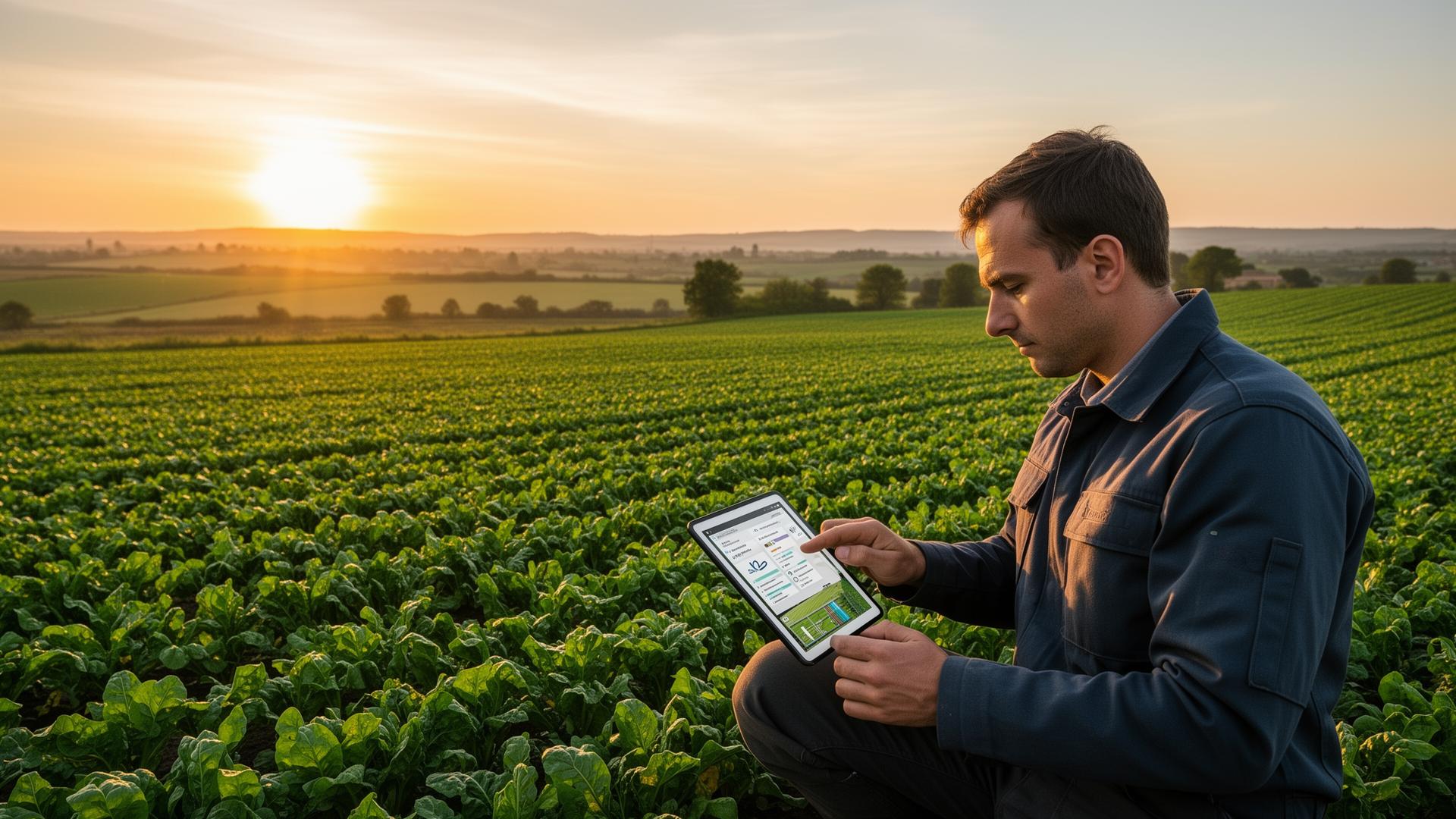
Digital Field Records 2026: How Modern Farmers Master Documentation and Organic Certification
The Challenge: Between Field and Office
Every farmer knows the dilemma: out in the field during the day, at the desk in the evening. Documentation obligations are growing steadily - cross-compliance, organic certification, fertiliser regulations. A recent study by the German Farmers' Association shows: farmers spend an average of 12 hours per week on documentation.
But there is another way.
What a Digital Field Record Must Deliver
A modern field record is more than an Excel spreadsheet. It must:
- Document field-specifically - Every operation is assigned to a specific field
- Check organic compliance - Automatic flagging of non-compliant operations
- Be audit-ready - Export for certification bodies at the push of a button
- Work on mobile - Data entry directly at the edge of the field via smartphone
Recording Operation Types
A complete field record covers all relevant operations:
| Operation | Documentation | Organic Relevance |
|---|---|---|
| Sowing | Variety, date, quantity | Seed origin |
| Fertilisation | Product, quantity, area | Only approved fertilisers |
| Crop protection | Preparation, dosage | Organic compliance check |
| Tillage | Type, depth, equipment | Erosion control |
| Harvest | Yield in kg/ha, quality | Traceability |
Soil Analysis as a Basis for Decisions
Professional farming is based on data. Regular soil analyses provide the basis for:
- Targeted fertilisation: Add only what is missing - good for the soil and your wallet
- pH management: Liming only when there is a demonstrated need
- Humus build-up: Securing long-term soil fertility
- Nutrient balances: Meeting legal requirements
Modern tools allow the digital recording of laboratory values (pH, N, P, K, Mg, Ca, humus) and automatically calculate nutrient balances and recommendations for action.
Biodynamic Preparations in Practice
For biodynamic farms (Demeter), preparations 500-508 play a central role. Digital documentation enables:
- Exact recording of application times
- Correlation with moon phases and planetary constellations
- Long-term analysis of the effect on soil vitality
Making Sustainability Measurable
Sustainability is not a marketing buzzword - it can be quantified:
- Biodiversity index (Shannon index): Species diversity on your land
- Humus balance: Carbon sequestration in the soil
- Energy efficiency: Input-output ratio
- Audit score: Overall assessment of your operational sustainability
An integrated dashboard displays these metrics in real time and makes progress visible - for you, your employees and your certification body.
Team Management on the Farm
Larger operations benefit from digital collaboration:
- Role system: Farm managers, employees and advisors with different access rights
- Shared field record: Everyone documents in one system
- Real-time overview: Who did what, when and on which field?
Conclusion: Documentation as an Opportunity
The digital field record is not just an obligation - it is an opportunity. Those who record their data systematically make better decisions, save time during audits and can steer their own farm development based on evidence.
"What you cannot measure, you cannot improve." - Peter Drucker
This article is aimed at agricultural operations in the DACH region. All requirements mentioned refer to the current EU regulation on organic farming (EU 2018/848) as well as the cross-compliance rules of the CAP.
Comments (0)
Sign in to comment.
📖 You might also like
Sowing According to Maria Thun: The Cosmic Sowing Calendar for 2026
The Maria Thun calendar combines cosmic rhythms with practical gardening. Learn how to use root, leaf, flower and fruit days for optimal yields in Germany, Austria and Switzerland.
Read more
Sowing Calendar 2026: Month by Month to a Full Harvest
When do you sow, pre-grow and plant what? The sowing calendar guides you month by month – plus a free app that keeps every sowing and harvest window for your bed on track automatically.
Read more
Lunar Gardening Calendar: Myth or Proven Practice?
For centuries, people have gardened by the moon. What does science say about it - and how can you use the lunar rhythm for better harvests? A critical look with practical tips.
Read more