Medicinal Herbs According to Hildegard von Bingen: Ancient Wisdom for the Modern Garden
Medicinal Herbs According to Hildegard von Bingen: Ancient Wisdom for the Modern Garden
Hildegard von Bingen (1098–1179) was centuries ahead of her time. Her works Physica and Causae et Curae document over 300 medicinal plants - many of which are confirmed by modern phytotherapy.
Hildegard's Concept of "Viriditas"
Viriditas - the "greening power" - is Hildegard's central concept. With it she describes the healing life energy of plants, which is transferred to humans. Modern interpretations see in it the interplay of secondary metabolites, essential oils and antioxidants.
The 10 Most Important Hildegard Herbs for Your Garden
1. Spelt (Triticum spelta)
Hildegard's "best grain". Contains more minerals than wheat and is easier to digest.
- Cultivation: Winter spelt from October, summer spelt from March
- PermaNatura tip: Plan it as green manure in Zone 3
2. Pellitory (Anacyclus pyrethrum)
"The universal root" - Hildegard's most important spice for everyday cooking.
- Effect: Promotes digestion, strengthens the immune system
- Cultivation: Sunny, well-drained soil, perennial
3. Galangal (Alpinia officinarum)
"The spice of life" - for heart problems and circulatory weakness.
- Effect: Promotes circulation, antibacterial
- Cultivation: In a pot (not winter-hardy), greenhouse or windowsill
4. Wild Thyme (Thymus serpyllum)
Hildegard's alternative to thyme - milder, but equally effective.
- Effect: Soothes coughs, antiseptic, strengthens the stomach
- Cultivation: Dry location, rock garden, path edges
5. Fennel (Foeniculum vulgare)
"Whoever eats fennel will feel well" - Hildegard's daily recommendation.
- Effect: Promotes digestion, relieves flatulence
- Cultivation: Sunny, nutrient-rich, mixed culture with cucumbers
6. Marigold (Calendula officinalis)
The "gold of the garden" - applicable both externally and internally.
- Effect: Heals wounds, anti-inflammatory
- Cultivation: Undemanding, self-seeding, mixed-culture all-rounder
7. Hyssop (Hyssopus officinalis)
Hildegard's remedy for liver and lung complaints.
- Effect: Expectorant, stimulates the appetite
- Cultivation: Sunny, dry, a great bee magnet
8. Sage (Salvia officinalis)
"Why should a person die as long as sage grows in their garden?"
- Effect: Antiseptic, reduces sweating, anti-inflammatory
- Cultivation: Sunny, calcareous, water sparingly
9. Mugwort (Artemisia vulgaris)
Hildegard's most important "mother's herb" for women's ailments.
- Effect: Promotes digestion, regulates menstruation
- Cultivation: Wild herb, growing almost everywhere, Zone 4-5
10. Yarrow (Achillea millefolium)
"The eyebrow of Venus" - a cure-all of folk medicine.
- Effect: Stops bleeding, antispasmodic, promotes digestion
- Cultivation: Meadows, path edges, undemanding
Creating a Hildegard Herb Garden
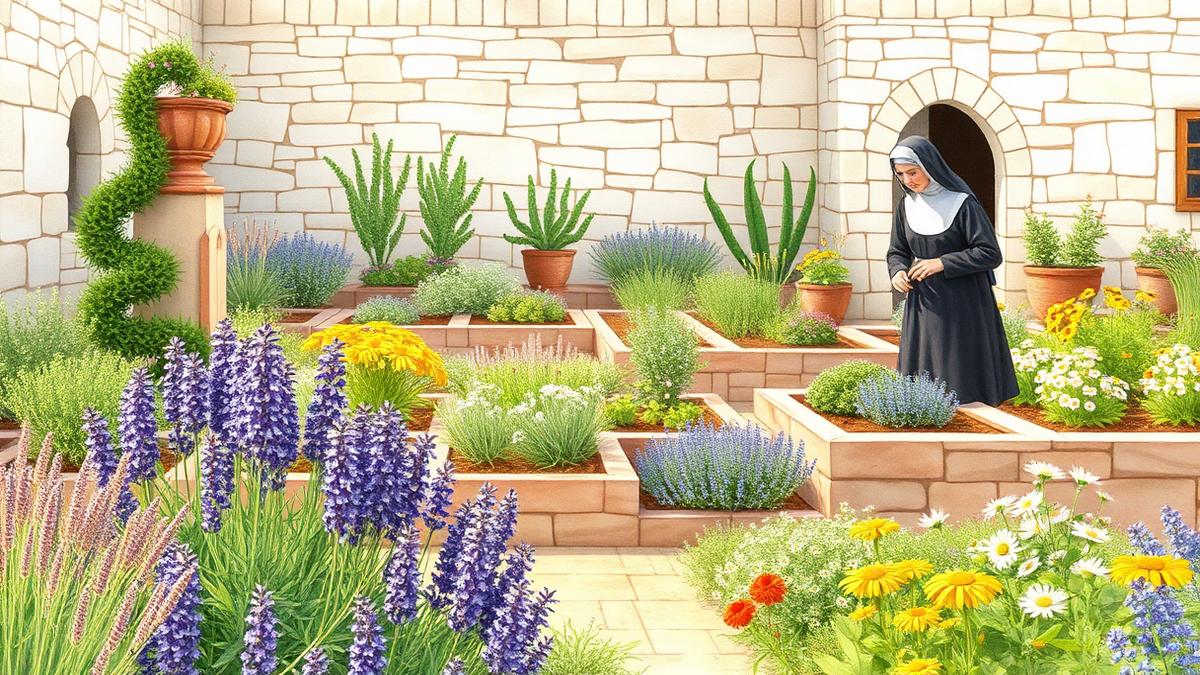
The Classic Monastery Garden
Traditional monastery gardens follow a geometric pattern:
| Area | Plants | Purpose |
|---|---|---|
| Hortus | Vegetables, cabbage, onions | Nutrition |
| Herbularius | Medicinal herbs, medicinal plants | Medicine |
| Paradiesus | Roses, lilies, ornamental plants | Contemplation |
| Pomarius | Fruit trees, wine | Fruit and juice |
Implementing It in PermaNatura
- Create a "Monastery Garden" project with a description of the zones
- Create beds by area (Hortus, Herbularius, etc.)
- Place herbs from the plant library - many Hildegard herbs are included
- Use the lunar calendar - Hildegard emphasized the importance of cosmic rhythms
- Document the harvest - drying and processing notes in the tasks system
Modern Applications
Hildegard Teas
- Fasting tea: Yarrow, wormwood, fennel
- Sleep tea: Lavender, wild thyme, hops
- Digestive tea: Fennel, galangal, pellitory
Hildegard Spice Blends
- Nerve cookies: Nutmeg, cinnamon, cloves (the famous "Hildegard cookies")
- Universal spice: Pellitory, galangal, wild thyme
Harvesting and Drying Hildegard Herbs Correctly
The best active-compound content is decided at harvest. Hildegard placed great importance on the right moment – and today it can be pinned down concretely:
- Leaves and foliage (sage, hyssop, wild thyme) are best harvested shortly before flowering on a dry morning once the dew has dried – that is when the essential-oil content is highest.
- Flowers (marigold, yarrow) are picked in full bloom in sunshine.
- Roots (mugwort, valerian) are dug up in autumn on the waning moon, when the strength moves into the root.
Dry them airy, dark and below 40 °C so the essential oils are preserved. To deepen the rhythm, plan sowing and harvest with the moon calendar in PermaNatura – Hildegard herself stressed the importance of cosmic rhythms.
Caution and Notes
⚠️ Hildegard's recommendations are based on the state of knowledge of the 12th century. For serious complaints, always consult a doctor. Some herbs (mugwort, wormwood) should not be used during pregnancy.
Conclusion
Hildegard's herbal knowledge is astonishingly timeless. Many of her recommendations align with modern phytotherapeutic findings. PermaNatura helps you plan an authentic herb garden according to Hildegard - with digital documentation that she would surely have appreciated.
Frequently Asked Questions About Hildegard's Herbs
Which medicinal herbs did Hildegard von Bingen recommend? Among her most important are fennel, galangal, pellitory, wild thyme, hyssop, sage, marigold, mugwort and yarrow – plus spelt as the "best grain".
What does "Viriditas" mean? Viriditas is Hildegard's term for the "greening power" – the healing life energy of plants. In modern terms it stands for the interplay of essential oils, antioxidants and secondary plant compounds.
Which Hildegard herbs are hardy and low-maintenance? Sage, hyssop, wild thyme, marigold and yarrow thrive in sunny, rather dry spots and return year after year. Galangal, by contrast, is not winter-hardy and is kept in a pot.
Can I use Hildegard herbs medicinally myself? As a tea, spice or in cooking, yes. For serious complaints, however, Hildegard's knowledge does not replace a doctor – and some herbs such as mugwort are avoided during pregnancy.
When do I plant a Hildegard herb garden? Most herbs go outdoors after the last frosts (mid-May); perennials like sage and hyssop can also be planted in early autumn.
Comments (0)
Sign in to comment.
📖 You might also like
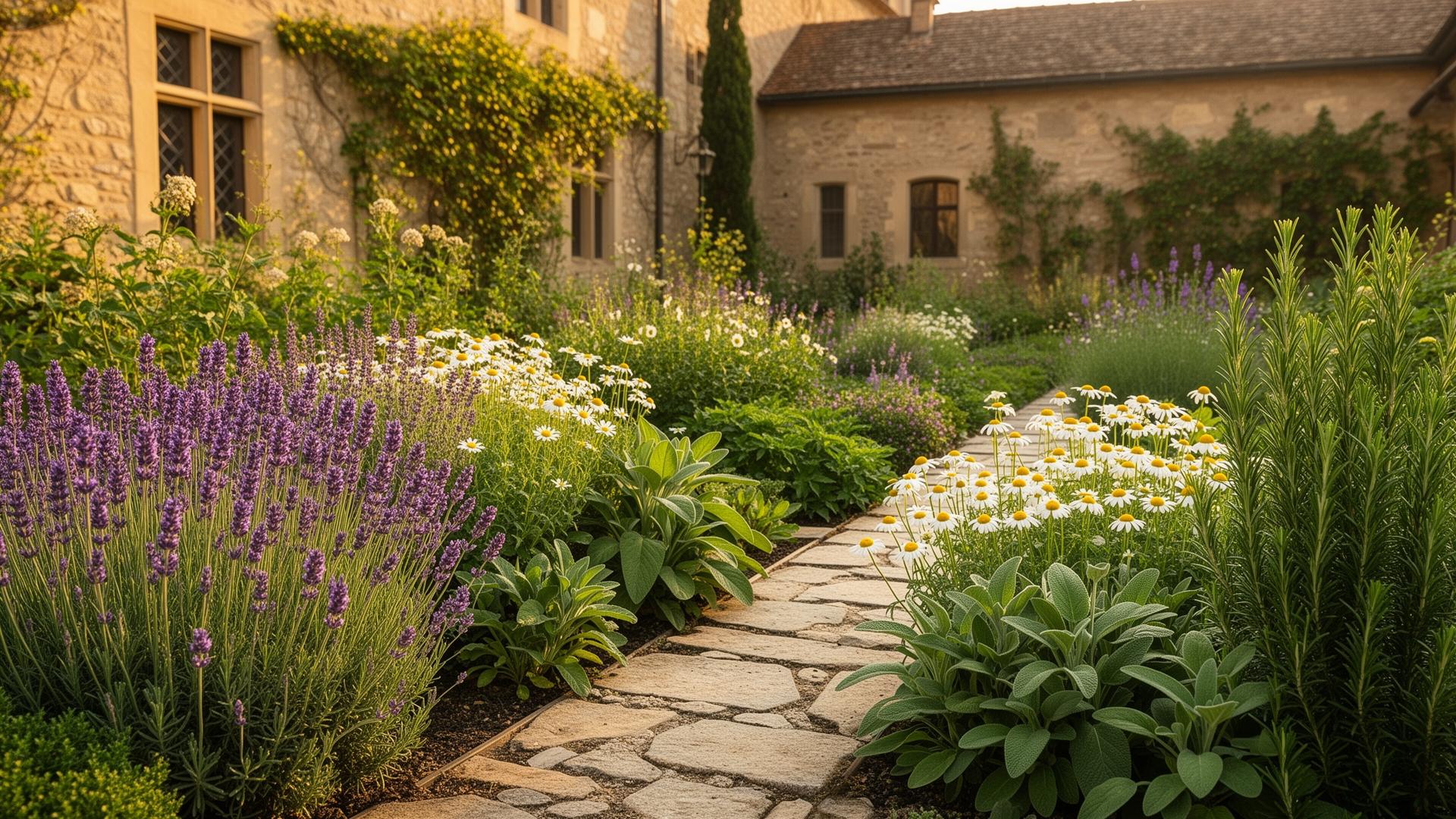
Medicinal Herbs from Your Own Garden: From Hildegard von Bingen to Modern Phytotherapy
Rediscover the power of medicinal plants: how to set up your own herbal pharmacy using ancient monastery knowledge and modern methods - with growing tips, tincture recipes and wild herb identification.
Read more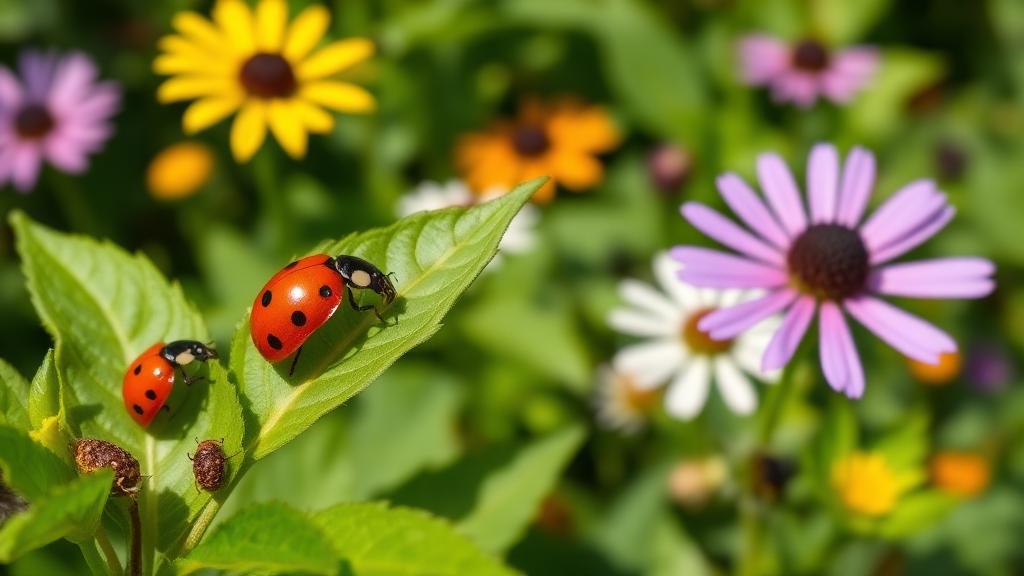
Natural Plant Protection: Home Remedies Against Aphids, Slugs & Co.
Fight aphids, slugs and mildew naturally: the best home remedies and beneficial insects for a healthy garden.
Read more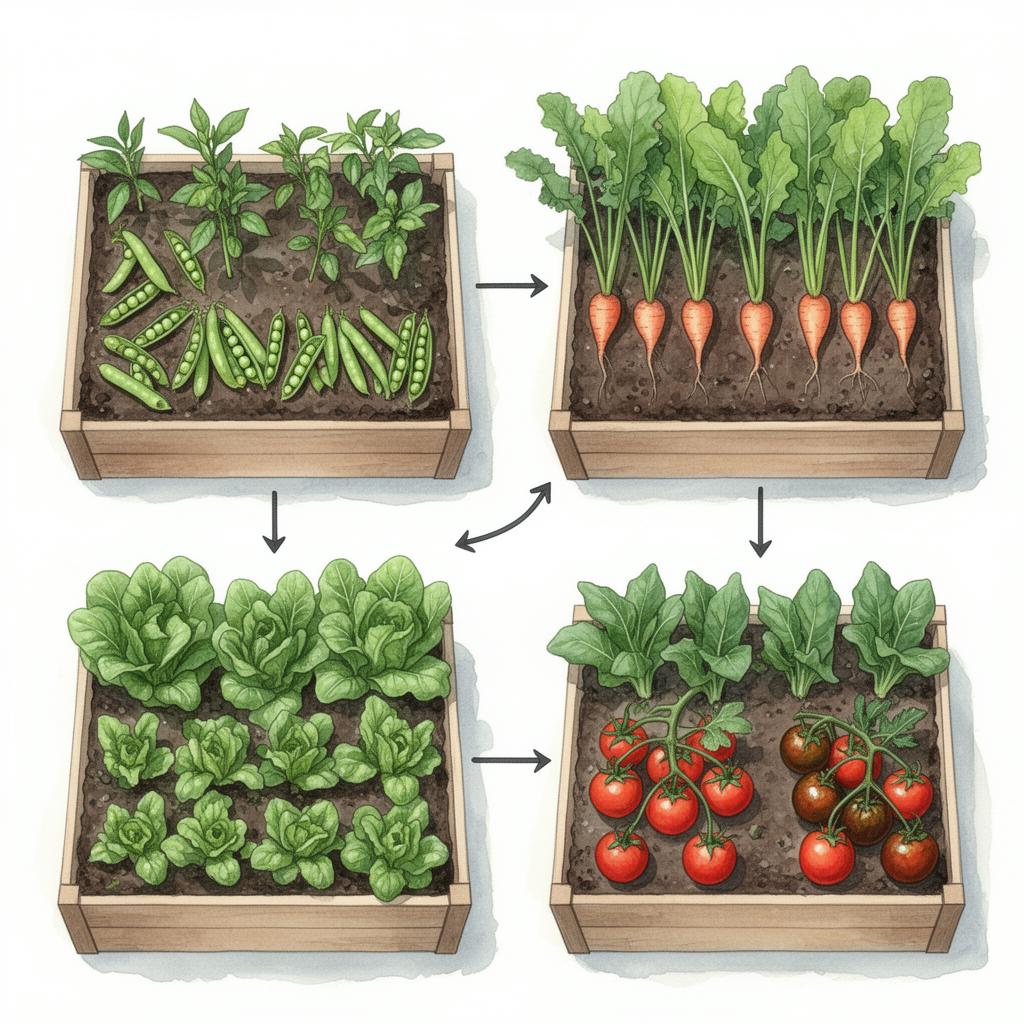
Which app to plan a vegetable garden? The honest 2026 comparison
You want to plan your vegetable beds digitally but aren't sure which app is right? This comparison shows what really matters – from companion planting and the sowing calendar to data privacy – and which type of gardener each solution suits.
Read more