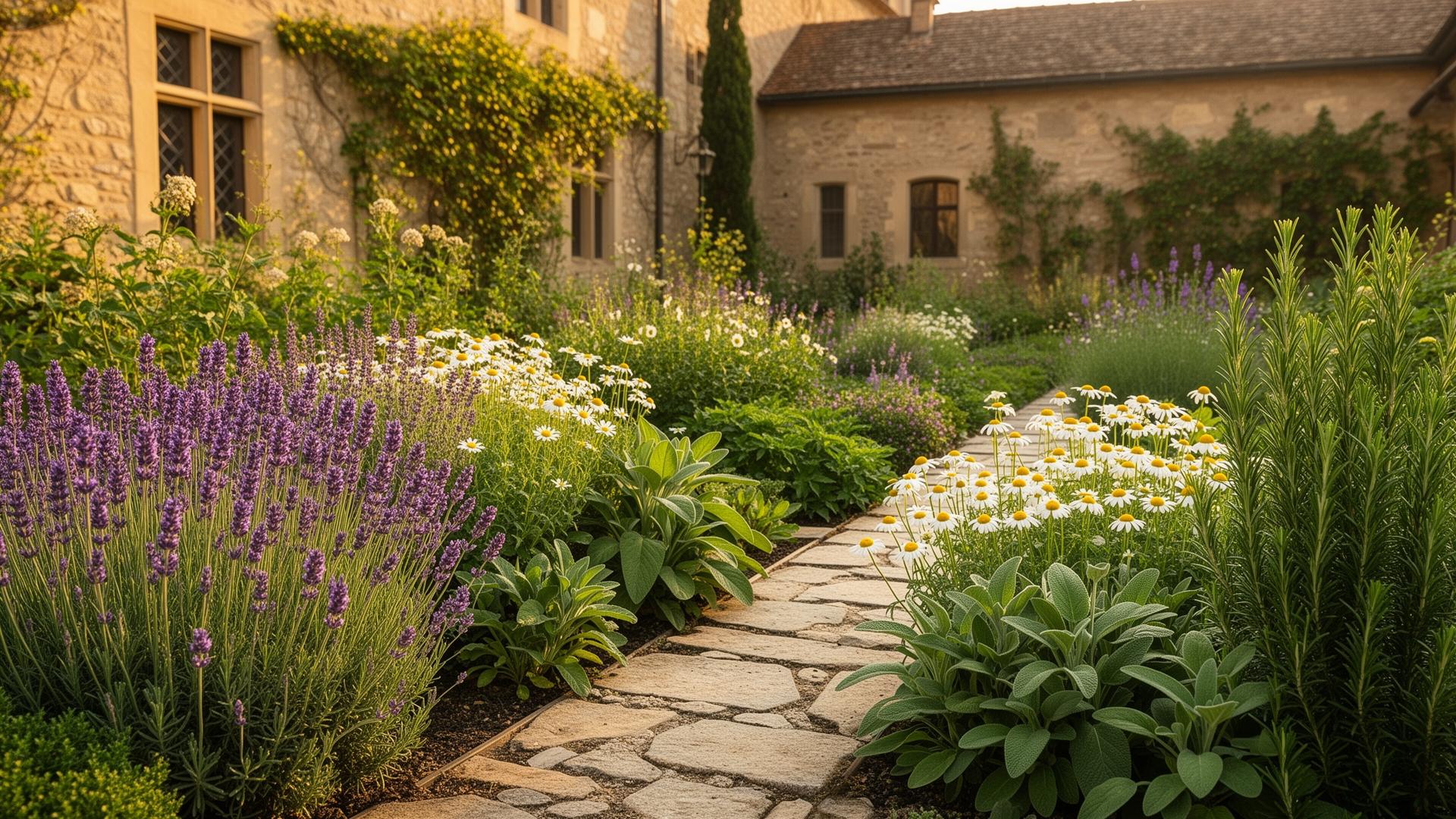
Medicinal Herbs from Your Own Garden: From Hildegard von Bingen to Modern Phytotherapy
The Renaissance of Herbal Medicine
At a time when more and more people are looking for natural alternatives, phytotherapy - herbal medicine - is experiencing a remarkable renaissance. According to a Forsa survey, over 70% of Germans use herbal remedies, and the trend is rising.
What is special: many of these medicinal plants thrive wonderfully in your own garden or grow as wild herbs right on our doorstep.
Hildegard von Bingen: Wisdom from the 12th Century
The Benedictine nun Hildegard von Bingen (1098-1179) is considered one of the most important naturopaths of the Middle Ages. Her works "Physica" and "Causae et Curae" describe over 200 medicinal plants and their applications.
Hildegard's Most Important Garden Herbs
🌿 Pellitory (Anacyclus pyrethrum) Hildegard's "universal remedy" - promotes digestion and strengthens the immune system. Today, research confirms its anti-inflammatory properties.
🌿 Galangal (Alpinia officinarum) The "spice of life" - for gastrointestinal complaints and general strengthening. Recognised in modern phytotherapy as digestive-promoting.
🌿 Fennel (Foeniculum vulgare) For Hildegard a remedy for a "cheerful mood" - today we know about its antispasmodic and carminative properties.
🌿 Marigold (Calendula officinalis) The wound-healing plant par excellence - Hildegard's recommendation is still valued in dermatology today.
Your Herb Garden: Setup and Care
Choosing a Location
Most medicinal herbs prefer:
- Full sun to partial shade
- Well-drained, rather poor soil
- Sheltered from wind (essential oils evaporate in the wind)
The Top 10 Medicinal Herbs for Beginners
| Plant | Effect | Harvest | Use |
|---|---|---|---|
| Peppermint | Digestion, headache | May-Sept | Tea, tincture |
| Chamomile | Anti-inflammatory | June-Aug | Tea, steam bath |
| Sage | Antibacterial, sore throat | May-Sept | Tea, gargle solution |
| Thyme | Cough, bronchitis | June-Aug | Tea, syrup |
| Lavender | Calming, sleep | July-Aug | Tea, pillow, oil |
| St. John's wort | Mood-lifting | June-Aug | Oil, tincture |
| Lemon balm | Calming, antiviral | May-Sept | Tea, tincture |
| Yarrow | Digestion, wound healing | June-Sept | Tea, tincture |
| Ribwort plantain | Cough, insect bites | Apr-Oct | Syrup, compress |
| Marigold | Wound healing, skin | June-Oct | Ointment, tea |
Making Tinctures Yourself
Tinctures are concentrated plant extracts in alcohol - they preserve the active ingredients and make them easy to dose.
Basic Herbal Tincture Recipe
- Plant material fresh or dried, fill into a screw-top jar (⅓ to ½ full)
- 40-60% alcohol (spirit or vodka), top up until everything is covered
- Leave to stand in a dark, cool place for 4-6 weeks, shaking daily
- Strain through a fine cloth and fill into dropper bottles
Dosage: As a rule 20-30 drops in a little water 3 times a day. If in doubt, always consult a doctor or naturopath.
Wild Herbs: The Forgotten Superfoods
Right on our doorstep grow plants with an astonishing nutrient content:
- Stinging nettle: 7 times more vitamin C than oranges, rich in iron
- Dandelion: Liver-strengthening, bitter and digestion-promoting
- Ground elder: A vitamin C bomb, tastes like parsley
- Chickweed: A tender wild herb, rich in minerals
Identifying Safely
The correct identification of wild herbs is essential - mix-ups can be dangerous. Modern AI-supported plant recognition tools offer a helpful initial assessment, but do not replace the sound knowledge of experienced herbalists.
Moon Phases and Herb Harvesting
Traditionally, medicinal herbs are harvested at specific moon phases:
- 🌑 New moon: Harvest roots (energy is drawn into the earth)
- 🌓 Waxing moon: Leaves and stems (sap rises)
- 🌕 Full moon: Harvest flowers (highest active-ingredient content)
- 🌗 Waning moon: Fruits and seeds
Whether this tradition is scientifically founded is controversially debated - but many experienced gardeners swear by it.
Conclusion: Ancient Knowledge, New Possibilities
Combining traditional herbal knowledge with modern tools opens up fascinating possibilities. Whether you set up a small herb balcony or plan a complete monastery garden - the first step is always the same: start with one plant, get to know it and let yourself be inspired by its effect.
Note: This article is for information purposes and does not replace medical advice. If you have health complaints, please consult a doctor or naturopath. All growing tips are optimised for Central Europe (the DACH region).
Comments (0)
Sign in to comment.
📖 You might also like
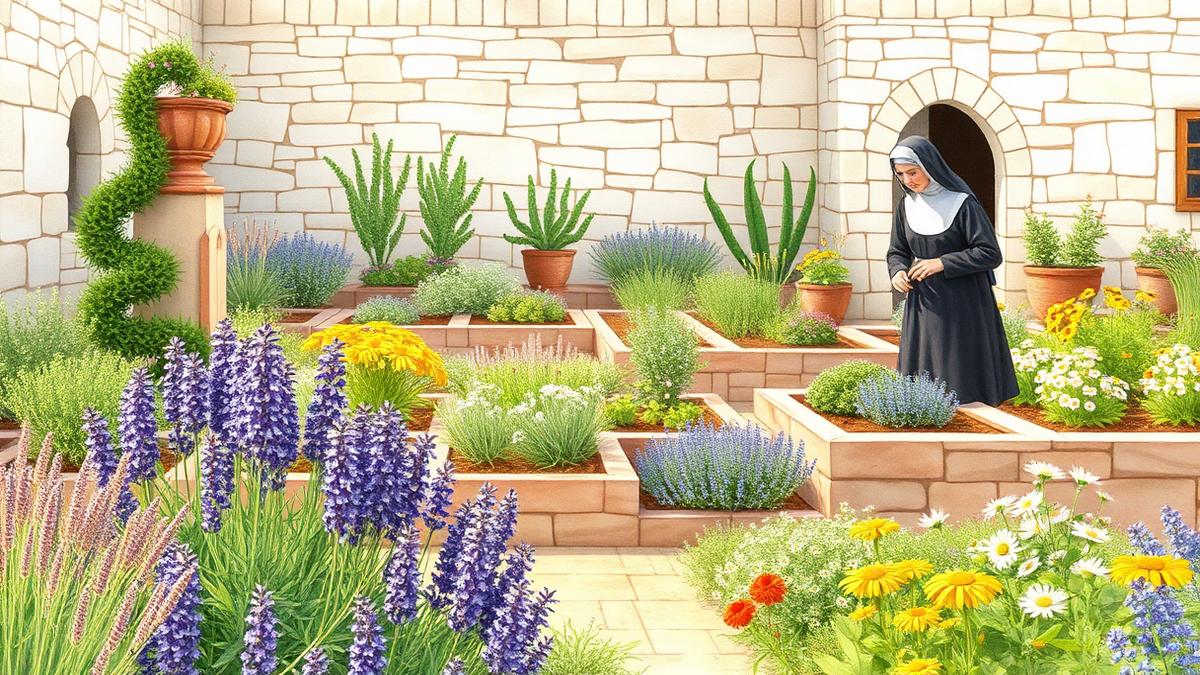
Medicinal Herbs According to Hildegard von Bingen: Ancient Wisdom for the Modern Garden
The abbess Hildegard von Bingen documented over 300 medicinal plants in the 12th century. Which of them belong in your garden - and how do you use them today?
Read more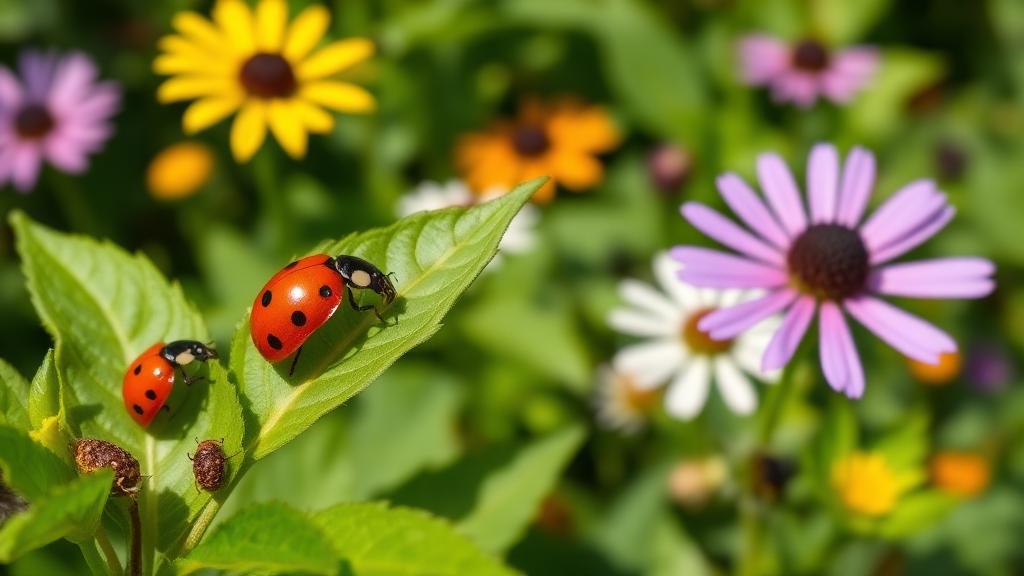
Natural Plant Protection: Home Remedies Against Aphids, Slugs & Co.
Fight aphids, slugs and mildew naturally: the best home remedies and beneficial insects for a healthy garden.
Read more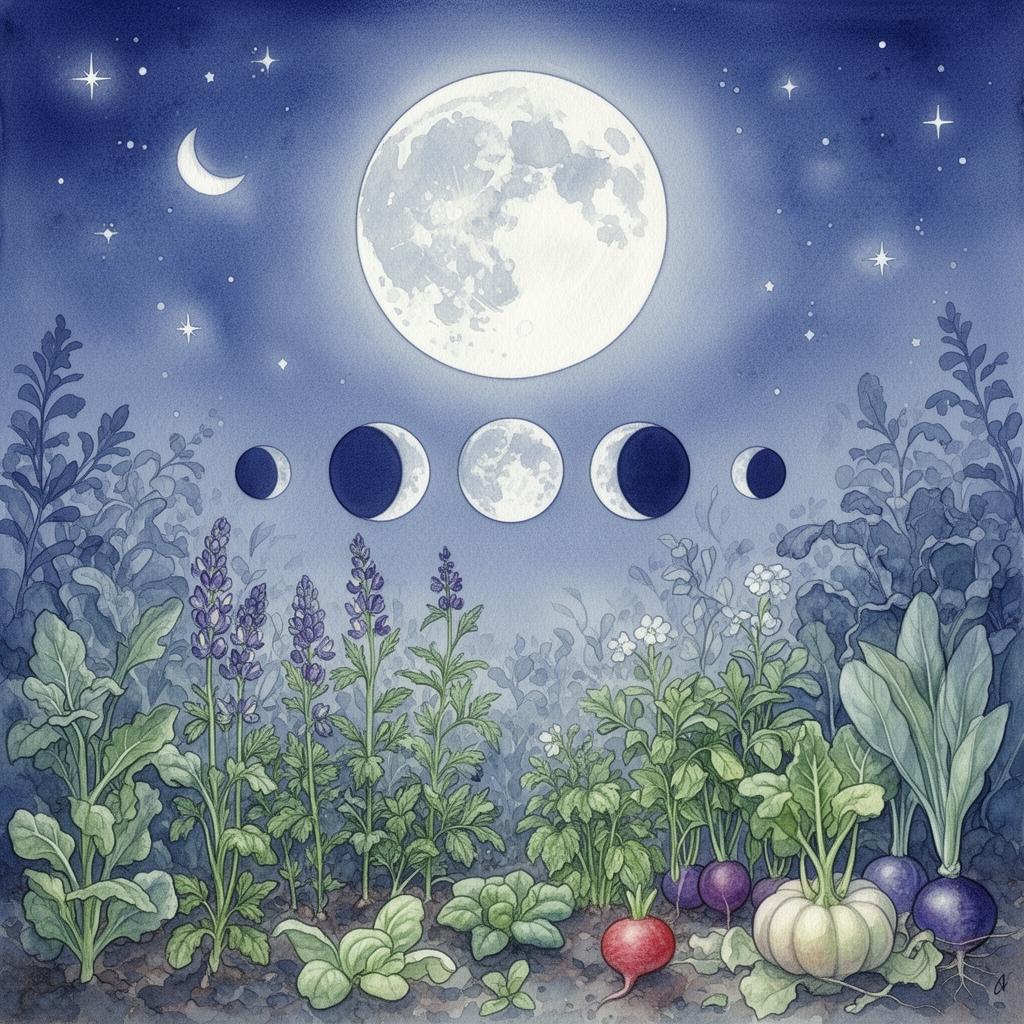
Lunar Gardening Calendar: Myth or Proven Practice?
For centuries, people have gardened by the moon. What does science say about it - and how can you use the lunar rhythm for better harvests? A critical look with practical tips.
Read more