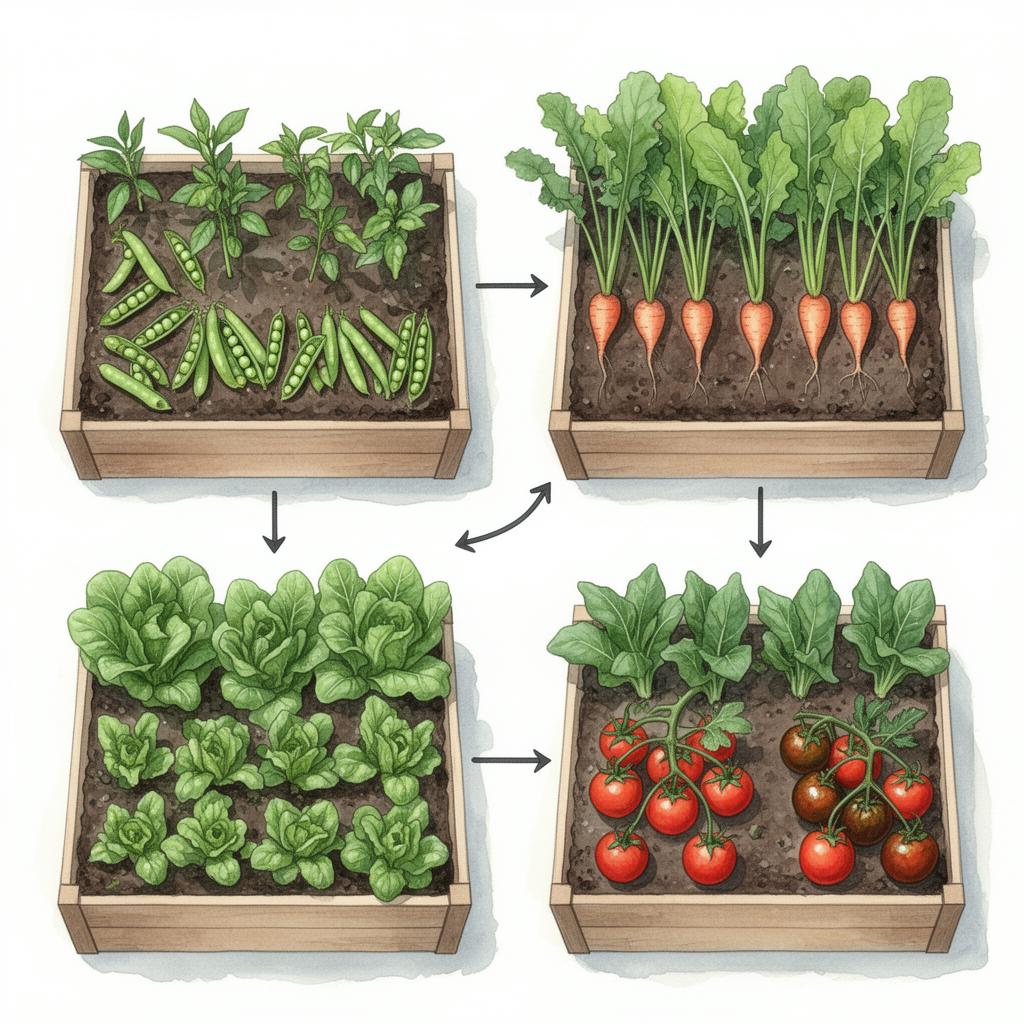
Planning Crop Rotation Digitally: How PermaNatura Prevents Soil Fatigue
What Is Soil Fatigue?
If you grow tomatoes in the same bed three years in a row, you'll notice it: the plants get smaller, more susceptible to disease, and the harvest shrinks. The phenomenon is called soil fatigue and affects hobby gardeners in the DACH region just as much as farmers with hundreds of hectares.
The causes are complex:
- Nutrient imbalance: Each plant species draws specific nutrients from the soil
- Root exudates: Plants leave behind substances that inhibit the growth of the same species (allelopathy)
- Pest cycles: Soil fungi and nematodes specialize in particular plant families
- Mycorrhiza depletion: Monocultures weaken the fungal network in the soil
The 4-Field Principle for the Home Garden
Classic crop rotation divides crops into four groups:
1. Heavy Feeders (Year 1)
Plants with high nutrient requirements:
- Tomatoes, peppers, squash, zucchini, cabbage, celery
- Preparation: Work in compost (3-5 L/m²), and horn shavings if needed
2. Medium Feeders (Year 2)
Moderate nutrient requirements:
- Carrots, onions, kohlrabi, fennel, chard, lettuce
- Preparation: Light application of compost (1-2 L/m²)
3. Light Feeders (Year 3)
Modest plants:
- Beans, peas, radishes, herbs, lamb's lettuce
- Bonus: Legumes (beans, peas) fix nitrogen in the soil!
4. Green Manure / Fallow (Year 4)
Regeneration of the soil:
- Phacelia, mustard, crimson clover, winter rye
- Effect: Loosens the soil, builds humus, suppresses weeds
Practical Example: 4 Beds Over 4 Years
Imagine you have 4 raised beds of 1.2 x 2.4 m – a typical size for allotments in Vienna, community gardens in Hamburg or family gardens in Bern.
| Bed A | Bed B | Bed C | Bed D | |
|---|---|---|---|---|
| 2026 | 🍅 Tomatoes, peppers | 🥕 Carrots, onions | 🫘 Beans, peas | 🌿 Phacelia |
| 2027 | 🥕 Carrots, chard | 🫘 Beans, radishes | 🌿 Green manure | 🍅 Squash, zucchini |
| 2028 | 🫘 Peas, herbs | 🌿 Mustard, clover | 🍅 Cabbage, celery | 🥕 Kohlrabi, fennel |
| 2029 | 🌿 Winter rye | 🍅 Tomatoes, peppers | 🥕 Lettuce, carrots | 🫘 Beans, lamb's lettuce |
Mind the Plant Families!
Even more important than heavy/light feeders is family rotation. Plants of the same family should have at least a 3-year break:
- Nightshades (Solanaceae): Tomato, pepper, potato, eggplant
- Brassicas (Brassicaceae): Cabbage, broccoli, radish, mustard, arugula
- Umbellifers (Apiaceae): Carrot, parsnip, celery, parsley, fennel
- Legumes (Fabaceae): Bean, pea, lentil, clover
Digital Crop Rotation in PermaNatura
PermaNatura makes crop rotation planning easy:
1. Document Your Beds
Each bed is recorded with its crops in the bed planner. The historical data is retained over the years.
2. Automatic Warning
If you want to plan a tomato where nightshades already grew last year, the companion planting checker warns you automatically.
3. Recommendations
Based on the bed history, PermaNatura suggests suitable follow-on crops – taking into account plant family, nutrient requirements and companion planting compatibility.
4. Harvest Tracking
Document your yields per bed and year. This way you can see across the seasons whether your crop rotation is working or whether yields are declining.
Special Considerations for the DACH Region
Short Growing Season
In the Alpine regions and northern Germany the season is shorter. Make use of:
- Starting seedlings on the windowsill from February
- Fleece and cold frames for a 2-4 week extension
- Winter vegetables: Lamb's lettuce, claytonia, kale survive frost
Soil Types
- Northern German sandy soils: More compost, more frequent green manure
- Alpine foothills loam soils: Good nutrient buffers, but watch out for waterlogging
- Swiss moraine soils: Often calcareous – check the pH value in the soil analysis module
Conclusion: Crop Rotation Is Not Rocket Science
With the 4-field principle and one simple rule – never the same family in the same spot two years in a row – you prevent 80% of all soil fatigue problems. PermaNatura helps you keep the overview, even when after three years you no longer remember where the tomatoes stood in 2026.
Plan your crop rotation digitally. Start PermaNatura for free.
Comments (0)
Sign in to comment.
📖 You might also like
Which app to plan a vegetable garden? The honest 2026 comparison
You want to plan your vegetable beds digitally but aren't sure which app is right? This comparison shows what really matters – from companion planting and the sowing calendar to data privacy – and which type of gardener each solution suits.
Read more
Ozone Stress in the Garden 2026: The Invisible Heat Damage on Tomatoes, Beans and Leafy Greens
When heat, strong sun and stagnant air come together, ground-level ozone can damage plant cells. Learn how to recognise ozone stress, separate it from drought, and protect your beds.
Read more
Full Moon Meets Heatwave: What Your Garden Needs on This Special Night
Tonight the Moon is almost full – and the heatwave is still here. Two forces pull at the garden. What lunar tradition says, what the heat demands, and how to bring them together wisely.
Read more