Heatwave in the Garden 2026: How to Carry Beds, Soil and Harvest Through the Hottest Days
Heatwave in the Garden 2026: How to Carry Beds, Soil and Harvest Through the Hottest Days
The thermometer climbs, the soil cracks open, and by the afternoon the leaves hang limp. A heatwave is a stress test for any garden – but most of the damage comes not from the heat itself, but from reacting to it the wrong way.
The good news: with a few targeted moves you can carry beds, raised beds and containers through 35 °C and beyond. Here is the practical plan for the hottest days.
The three most expensive heat mistakes
Before the solutions, three things almost everyone gets wrong in the heat – and that do more harm than good:
- Watering at midday in full sun. A large share of the water evaporates before it reaches the roots. Droplets on the leaves act like tiny magnifying glasses and can worsen scorching.
- Watering a little every day. Frequent small amounts keep roots shallow, right at the hot surface – exactly where they dry out first.
- Leaving the soil bare. Open, uncovered soil heats up, loses water and crusts over. Every square metre without mulch is an evaporation surface.
Avoid these three and you are already halfway to heat protection.
Water properly: rarely, early and deep
The most important rule in heat: infrequent and deep beats often and shallow.
- When? Early morning is ideal. The soil is cool, the water soaks in, and the plant is ready for the hot day. Second best: late evening.
- How much? Water deeply every two to three days so the water reaches 15–20 cm down. That pulls roots downward, where the soil stays moist longer.
- Where? Always at the root, never over the leaves. Drip irrigation, a clay cone or a buried bottle deliver water exactly where it is needed, with no evaporation loss.
A simple test: after watering, push a finger or a stick into the soil. If only the top is moist and it is bone dry below, it was too little.
Mulch: the single best heat insurance
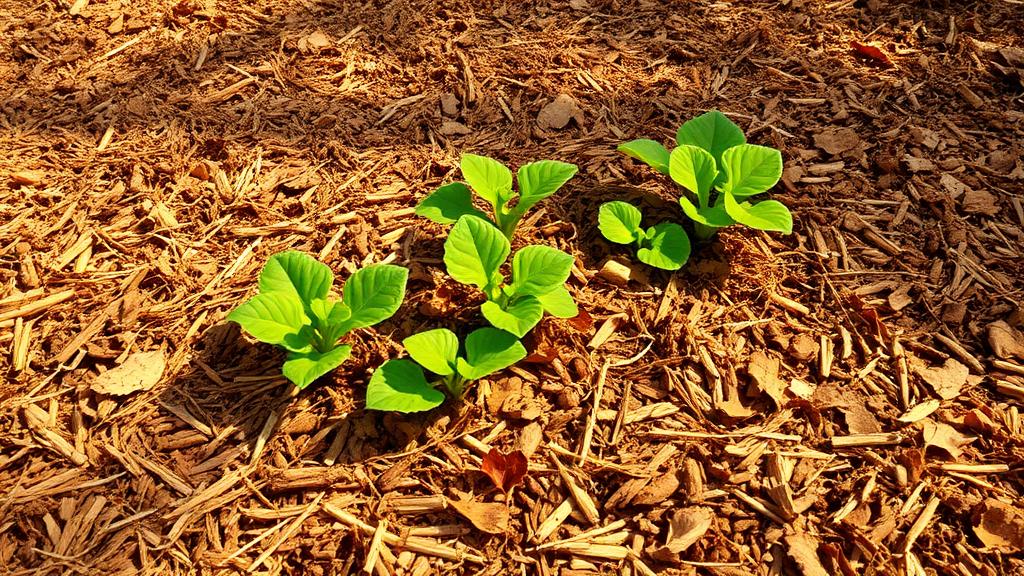
If you do only one thing in the heat, mulch. A 5–7 cm layer of grass clippings, straw, leaves or shredded prunings works like air conditioning for the soil:
- It noticeably lowers soil temperature.
- It cuts evaporation by up to two thirds.
- It prevents crusting and keeps the soil loose.
- As it breaks down, it feeds soil life.
Important: mulch onto moist soil, never dried-out soil. Water thoroughly first, then cover.
Use shade deliberately
Not every plant tolerates full midday sun in extreme heat. Sensitive crops – lettuce, spinach, young seedlings, anything freshly planted – will thank you for a little shade during the hottest hours:
- shade netting (50–70 %) stretched over hoops
- an old sheet or a sail on stakes
- taller neighbours such as corn or sunflowers as living shade
The goal is not permanent shade, but protection from peak sun between roughly 11 a.m. and 4 p.m.
Which plants suffer most right now
- Tomatoes: above 35 °C they often stop setting fruit and drop blossoms. Even watering prevents cracked fruit and blossom-end rot.
- Leafy greens (lettuce, spinach, rocket): bolt quickly in heat and turn bitter. Shade and moist soil delay it.
- Cucumbers, courgettes, squash: big leaves, high water demand. Limp leaves at noon are often self-protection – judge real water shortage only in the evening.
- New plantings: have no deep roots yet and are most at risk. In extreme heat, it is better to delay planting.
Raised beds and containers: the heat hotspot
Pots, window boxes and raised beds heat up from every side and dry out far faster than open ground. On hot days they often need water twice a day.
- Move pots into partial shade on the hottest days.
- Saucers with a little water create a reserve – but never permanently, or roots rot.
- Group containers close together: they shade each other and hold moisture better.
Your soil is the best water reservoir
The most lasting heat protection is built long before the heatwave: a humus-rich, living soil. Humus stores many times its weight in water and releases it slowly. Compost, green manure and permanent ground cover make your garden more drought-resistant year after year – an investment that pays off in every hot spell.
Your heat emergency plan at a glance
- ☑ Water deeply early in the morning, straight to the root
- ☑ Cover all beds with 5–7 cm of mulch
- ☑ Shade sensitive crops over the midday hours
- ☑ Check pots and raised beds daily (often twice)
- ☑ Harvest and transplant in the cool edges of the day
- ☑ No fertilising in extreme heat – it adds stress
- ☑ Harvest ripe fruit promptly to relieve the plants
After the heat
As temperatures drop, look back: which beds dried out fastest? Where was the mulch missing? Which crop kept producing despite the heat? Recording these observations lets you plan the next season more precisely – with more mulch, smarter plant choices and irrigation that fits your site.
Conclusion
A heatwave is no reason to panic, just a matter of the right routine: water deep and early, mulch consistently, shade deliberately and build the soil for the long run. That is how beds, plants and harvest make it through the hottest days of 2026.
With PermaNatura you keep watering, site data and weather windows in view, document every action right at the bed, and see season after season what really works in the heat. Start for free.
Comments (0)
Sign in to comment.
📖 You might also like
Full Moon Meets Heatwave: What Your Garden Needs on This Special Night
Tonight the Moon is almost full – and the heatwave is still here. Two forces pull at the garden. What lunar tradition says, what the heat demands, and how to bring them together wisely.
Read more
Ozone Stress in the Garden 2026: The Invisible Heat Damage on Tomatoes, Beans and Leafy Greens
When heat, strong sun and stagnant air come together, ground-level ozone can damage plant cells. Learn how to recognise ozone stress, separate it from drought, and protect your beds.
Read more
Which app to plan a vegetable garden? The honest 2026 comparison
You want to plan your vegetable beds digitally but aren't sure which app is right? This comparison shows what really matters – from companion planting and the sowing calendar to data privacy – and which type of gardener each solution suits.
Read more