
Ozone Stress in the Garden 2026: The Invisible Heat Damage on Tomatoes, Beans and Leafy Greens
Ozone Stress in the Garden 2026: The Invisible Heat Damage on Tomatoes, Beans and Leafy Greens
After the first heatwaves, almost every gardener thinks about water. Rightly so. But on very sunny, stagnant summer days, a second stress factor can hit your plants: ground-level ozone.
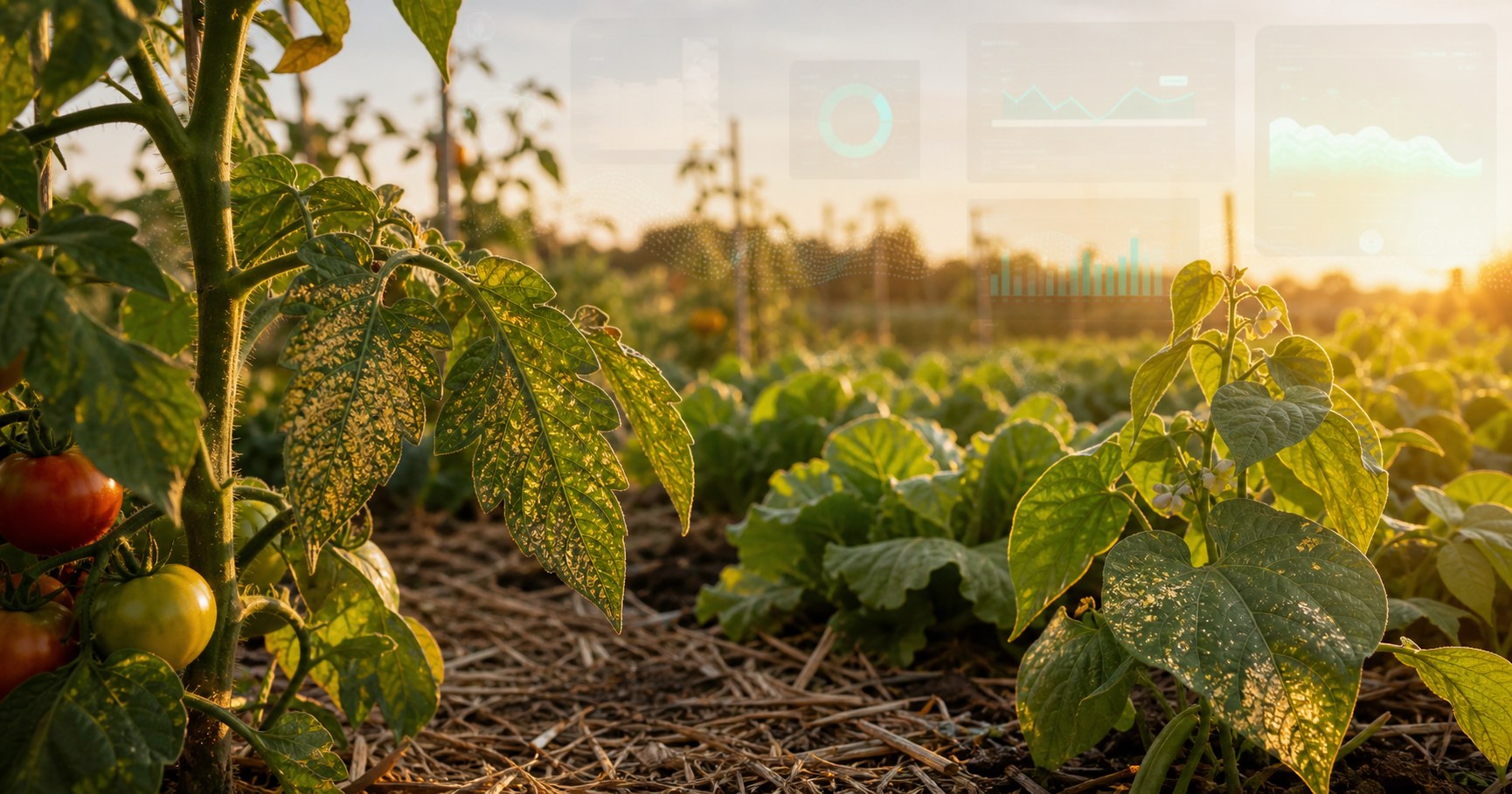
It does not smell like danger, it does not sit on the leaves as a visible film, and yet it can cost yield. After days of strong radiation, heat and little air movement, pale speckles, bronzed leaf patches or leaves that age too early can suddenly appear. Many gardeners read this as drought, fungus or nutrient deficiency. Often it is a mixture. Sometimes ozone is the quiet accomplice.
This is your practical guide to ozone stress in the bed: how to recognise it, which crops are sensitive and what actually helps.
Why ozone is becoming a garden topic now
Ozone in the upper atmosphere protects us from UV radiation. Ground-level ozone is different: it forms when precursor pollutants from traffic, industry, solvents, agriculture and vegetation fires react chemically in strong sunlight. Heat, high radiation, dry air and stable weather patterns can intensify this formation.
The European Environment Agency describes ground-level ozone as a burden for crops, forests and ecosystems. It can damage plant cells, slow growth and reduce yields. For gardeners, that means soil moisture and temperature are not the only signals that matter. Air quality also belongs in hot-weather observation.
That fits the current summers uncomfortably well: earlier heat peaks, longer dry spells and more days with intense radiation make ozone stress more likely. That is why it deserves a place in bed monitoring.
What ozone does inside the plant
Plants take in ozone through the stomata on their leaves. Inside the leaf, it reacts quickly and creates oxidative stress. In simple terms: leaf cells are chemically attacked before the plant can fully repair the damage.
Typical effects:
- less photosynthesis
- faster leaf ageing
- weaker root and fruit development
- higher sensitivity to heat, drought and disease
- visible spotting or bronzing on sensitive crops
Ozone stress is therefore not one single "spot", but a stress state. It appears especially when the plant already has to do a lot: grow, flower, fill fruit, save water and endure heat.
The key symptoms in the garden
Ozone stress usually appears on older, fully developed leaves. Young tissue often stays normal for longer.
Watch for:
- fine pale speckles between the leaf veins
- bronze or silvery-matt leaf patches
- uneven yellowing without a clear nutrient pattern
- early leaf drop on beans, potatoes or tomatoes
- upper leaf surfaces more affected than undersides
- several plants of the same crop showing similar symptoms at once
The important clue is timing: symptoms appear after very sunny, hot, calm days and not necessarily after one missed watering.
Ozone stress or drought? How to tell the difference
Drought stress often starts with limp leaves, rolled edges and a dry root zone. Ozone stress is more likely to show firm but speckled or bronzed leaves. The plant may not look wilted; it looks prematurely aged.
A quick check:
| Observation | Points more toward |
|---|---|
| Leaves droop at noon and recover in the evening | Heat/water stress |
| Soil is dry 10 cm down | Water shortage |
| Fine pale dots on the upper leaf surface | Ozone stress possible |
| Spots with coating, rings or spores | Fungal disease more likely |
| Several crops in sunny spots affected together | Air/heat stress |
| Only one plant affected | Local damage, pest or disease |
Important: ozone, heat and drought often occur together. Do not hunt for one single cause. The best diagnosis combines leaf symptoms, weather history, soil moisture and site.
Especially sensitive crops
Not every plant reacts in the same way. During ozone-prone weather, watch especially:
- Beans: often show pale speckles and bronzed leaf areas.
- Tomatoes: can lose leaf mass faster under heat and ozone; yield and fruit quality suffer indirectly.
- Potatoes: may show earlier leaf ageing and lower tuber performance.
- Cucumbers and squash: large leaf area means high exchange with the air.
- Leafy greens: suffer twice because visible leaf quality is the harvest.
- Berries and young fruit trees: may show earlier canopy stress on dry, hot sites.
Robust, well-supplied plants tolerate ozone peaks better. Weak plants on dry, bare soil struggle faster.
What actually helps
You cannot "water ozone away" in the garden. But you can manage plants so they take less damage.
1. Keep soil moisture stable
Ozone stress becomes worse when plants are also water-stressed. Water rarely but deeply. The goal is an evenly moist root zone, not a wet surface.
2. Use mulch as a buffer
Mulch lowers soil temperatures, saves water and keeps soil life active. This gives the plant more reserve when the air gets difficult. A 5 to 7 cm layer of straw, wilted grass clippings, leaves or shredded green material works well.
3. Soften the midday peak
Sensitive crops benefit from light shading on ozone-heat days. A shade net with 30 to 50 percent shading is often enough. The goal is not darkness, but less radiation stress between noon and 5 p.m.
4. Do not fertilise during stress peaks
Heavy feeding during extreme heat pushes growth when the plant needs to repair and conserve water. Better: compost and soil building beforehand; calm during the peak.
5. Document leaf diagnosis
Photograph affected leaves and note date, weather, site, crop and variety. After two weeks, patterns appear: Which variety stayed stable? Which bed was affected first? Which mulch cover helped?
6. Time care work wisely
Pruning, transplanting, major cutting or harvesting leafy greens belongs in the cool morning. Plants under ozone and heat do not need an extra wound in the afternoon sun.
The PermaNatura workflow for ozone days
- Mark the weather window: hot, very sunny, calm, dry.
- Check the soil: 10 to 15 cm deep, not only the surface.
- Scan sensitive crops: beans, tomatoes, potatoes, cucumbers, leafy greens.
- Photograph symptoms: leaf upper side, whole plant, bed surroundings.
- Log the action: mulch, watering, shading, harvest, rest.
- Plan a follow-up: compare again 3 to 5 days later.
That turns a vague damage pattern into a season record that learns. This is where digital garden planning becomes strong: not in guessing, but in recognising patterns.
What not to do
- Do not treat every speckled leaf as fungus immediately.
- Do not overhead-water at midday.
- Do not "rescue" with nitrogen when the plant is under heat.
- Do not remove all affected leaves at once; many still produce energy.
- Do not look only at temperature. Radiation, wind, soil moisture and air quality belong together.
Conclusion
Ozone stress is not a panic topic, but it is a modern garden topic. In hot summers, watching the watering can is no longer enough. Plants need stable roots, cooler soil, softer midday peaks and careful observation.
Once you know the signs, you can separate thirst, disease and air stress faster. And you can plan the next hot week with real observations from your garden instead of guesswork.
With PermaNatura you document weather, watering, site conditions and leaf photos directly at the bed. That helps you see which varieties and areas really stay resilient in hot summers. Start for free.
Sources & context
Comments (0)
Sign in to comment.
📖 You might also like
Full Moon Meets Heatwave: What Your Garden Needs on This Special Night
Tonight the Moon is almost full – and the heatwave is still here. Two forces pull at the garden. What lunar tradition says, what the heat demands, and how to bring them together wisely.
Read more
Heatwave in the Garden 2026: How to Carry Beds, Soil and Harvest Through the Hottest Days
The hottest days of the year are here. With the right moves on watering, mulch and shade, you can get your plants through without heat stress – a clear action plan instead of watering-can panic.
Read more
Which app to plan a vegetable garden? The honest 2026 comparison
You want to plan your vegetable beds digitally but aren't sure which app is right? This comparison shows what really matters – from companion planting and the sowing calendar to data privacy – and which type of gardener each solution suits.
Read more