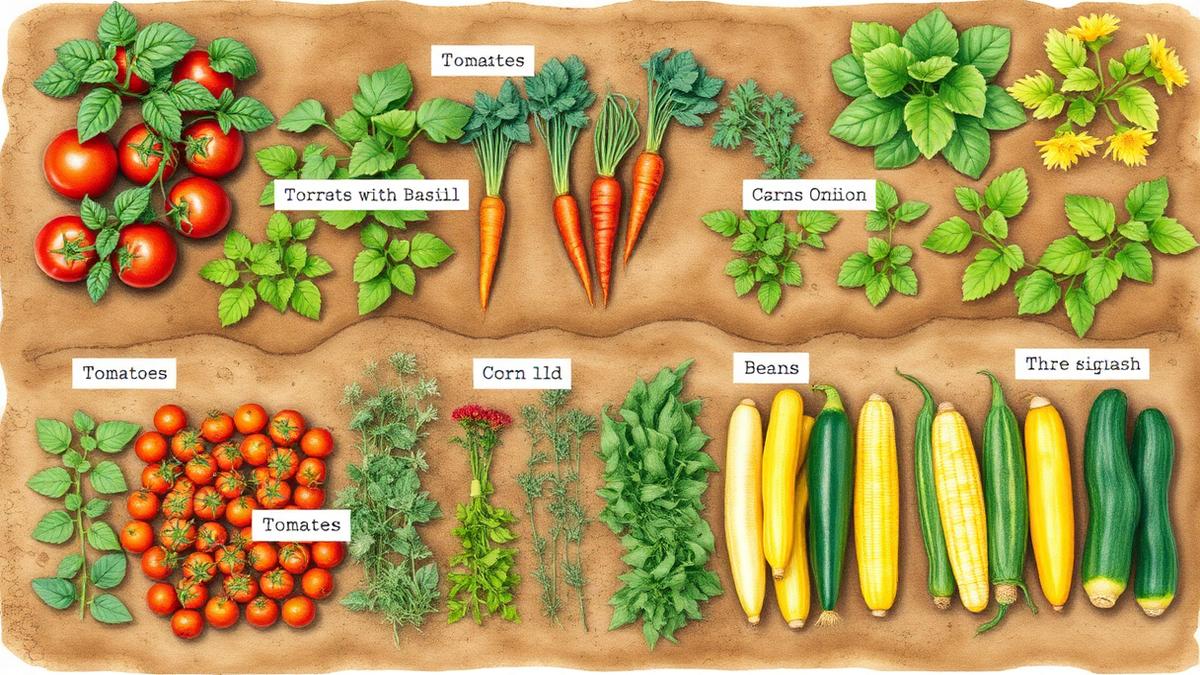
Companion Planting Chart: The Best Plant Neighbours for Your Bed
Companion Planting Chart: The Best Plant Neighbours for Your Bed
Anyone who combines the right plants in the bed harvests up to 30 % more on the same area, has fewer pests and needs less fertiliser. Companion planting is perhaps the most effective tool of ecological gardening practice - and it costs not a single cent extra.
Why Companion Planting Works
Plants do not live in isolation. They communicate via root exudates, scents and soil fungi (mycorrhiza). Good neighbours support one another:
- Deep rooters + shallow rooters = optimal soil use
- Heavy feeders + light feeders = nutrient balance
- Aromatic plants = confuse pests
- Nitrogen fixers (legumes) = naturally fertilise neighbours
- Ground cover = suppress weeds, retain moisture
The Big Companion Planting Chart
| Main crop | ✅ Good neighbours | ❌ Bad neighbours |
|---|---|---|
| Tomato | Basil, parsley, carrot, garlic, celery, marigold (Tagetes) | Potato, fennel, cabbage, pea |
| Potato | Bean, cabbage, spinach, marigold (Tagetes), horseradish | Tomato, celery, sunflower, squash |
| Carrot | Onion, leek, lettuce, tomato, pea, dill | Parsley, beetroot, celery |
| Onion | Carrot, lettuce, strawberry, tomato, cucumber | Bean, pea, cabbage |
| Cabbage (all types) | Celery, bush bean, spinach, dill, tomato, lettuce | Onion, garlic, strawberry |
| Cucumber | Bean, cabbage, leek, lettuce, dill, marigold (Tagetes) | Tomato (ok in pots), radish |
| Bean (bush/pole) | Summer savory, carrot, cabbage, lettuce, celery, strawberry | Onion, garlic, leek, pea, fennel |
| Pea | Carrot, cucumber, lettuce, radish, spinach | Bean, garlic, onion, tomato |
| Lettuce | Strawberry, carrot, radish, onion, bean, cucumber | Celery, parsley |
| Strawberry | Garlic, onion, spinach, lettuce, parsley | Cabbage, tomato |
| Courgette / Squash | Bean, corn, nasturtium, pot marigold (Calendula) | Potato, cucumber (disease pressure) |
| Pepper | Basil, carrot, marigold (Tagetes), tomato (separately) | Bean, fennel, pea |
| Leek | Carrot, strawberry, celery, tomato | Bean, pea, beetroot |
| Spinach | Strawberry, cabbage, radish, tomato | Beetroot |
| Beetroot | Bush bean, dill, cabbage, lettuce, onion | Leek, spinach, corn |
The 7 Strongest Plant Combinations
1. Tomato + Basil + Marigold (Tagetes)
A classic in the Mediterranean bed: basil keeps the whitefly away, Tagetes drives nematodes from the soil, the tomato provides shade.
2. Carrot + Onion
The onion confuses the carrot fly, the carrot keeps the onion fly away. Planting distance: alternating rows every 25 cm.
3. Corn + Bean + Squash (Milpa)
The 3 sisters of the Incas: corn as a support, bean as a nitrogen supplier, squash as a ground cover. Classic polyculture with the highest area yield.
4. Potato + Bush Bean
The bean fixes nitrogen, the potato benefits. Beans also suppress the Colorado potato beetle pressure.
5. Lettuce + Radish + Carrot
Three ripening times staggered: radish (4 weeks) → lettuce (8 weeks) → carrot (16 weeks). Optimal area use.
6. Cabbage + Celery + Tomato
Celery keeps the cabbage white butterfly away, the tomato additionally. This combination saves almost every spraying application.
7. Strawberry + Garlic + Spinach
Garlic acts against grey mould, spinach keeps the soil moist and covered, the strawberry delivers the harvest.
Pest Control through Aromatic Plants
| Aromatic plant | repels | good with |
|---|---|---|
| Marigold (Tagetes) | Nematodes, whitefly | Tomato, strawberry, potato |
| Nasturtium | Aphids | Fruit trees, cabbage |
| Pot marigold (Calendula) | Soil fatigue | everywhere, companion planting border |
| Lavender | Ants, moth species | Roses, strawberry |
| Summer savory | Black bean aphid | Beans, in general |
| Dill | Leek moth | Carrots, onion, cabbage |
| Garlic | Fungi in general | Strawberries, roses, tomatoes |
Practical Plan: 4-Field Companion Planting (4 m²)
🟦 Field 1 (heavy feeders)     🟩 Field 2 (medium feeders)
   Tomato + Basil                 Carrot + Onion
   + Marigold (Tagetes)           + Lettuce

🟧 Field 3 (light feeders)     🟪 Field 4 (soil rest)
   Pea + Lettuce + Spinach        Green manure
                                   (Phacelia/clover)
In the following year the fields rotate by one position - this way the crop rotation is automatically maintained.
Common Mistakes
| Mistake | Consequence | Solution |
|---|---|---|
| Tomato + Potato | both prone to late blight | separate, min. 5 m distance |
| Bean + Onion | both struggle | separate the beds |
| only one variety (monoculture) | pest pressure rises | min. 3 plant species per bed |
| without flowering plants | few pollinators | scatter in pot marigold (Calendula), phacelia |
Conclusion
A well-planned companion planting is the most effective form of ecological gardening - it saves pesticides, fertiliser and paths. Keep the chart handy and plan your bed in PermaNatura directly with the planting partners.
💡 Practical tip PermaNatura: In the bed planner you immediately get a harmony score (0-100) when placing a plant, which colour-codes good and bad neighbours - including suggestions for the optimal complement.
Frequently Asked Questions About Companion Planting
What is companion planting? Companion planting means deliberately placing different plant species next to each other so they support one another – through nutrient balance, pest defence and better use of the soil instead of competition.
Which plants grow well together? Proven partners are tomato & basil, carrot & onion or the trio corn, bean & squash. You'll find the full overview in the chart above.
Which plants should not be next to each other? Bad neighbours include tomato & potato (both prone to late blight), bean & onion, or pea & bean. Keep at least a few rows between them.
How do I combine companion planting with crop rotation? If the bed fields rotate by one position each year, the crop rotation is maintained automatically. More on this in Planning crop rotation digitally.
Does companion planting also work in a raised bed? Yes – on the intensively used area of a raised bed companion planting is especially effective. Just make sure there is enough space between heavy feeders.
Which app helps me plan good and bad neighbours in the bed? With the free bed planner from PermaNatura you arrange your plants by drag & drop and instantly see which neighbours help and which clash – the companion planting from this chart is shown live in the bed grid, including a harmony score per bed.
Sources: Marie Luise Kreuter "Der Biogarten", Gertrud Franck "Gesunder Garten durch Mischkultur", practical experiences of biodynamic nurseries.
Comments (0)
Sign in to comment.
📖 You might also like
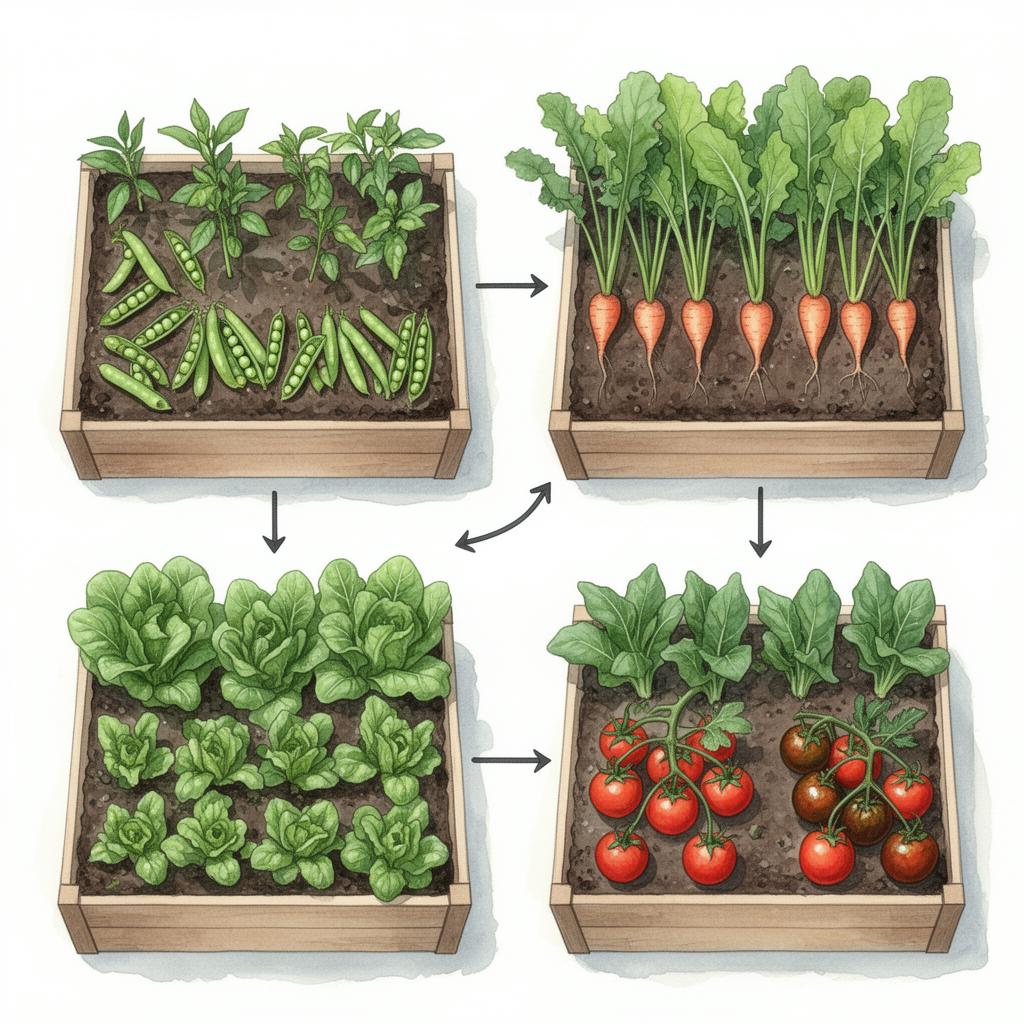
Which app to plan a vegetable garden? The honest 2026 comparison
You want to plan your vegetable beds digitally but aren't sure which app is right? This comparison shows what really matters – from companion planting and the sowing calendar to data privacy – and which type of gardener each solution suits.
Read more
Ozone Stress in the Garden 2026: The Invisible Heat Damage on Tomatoes, Beans and Leafy Greens
When heat, strong sun and stagnant air come together, ground-level ozone can damage plant cells. Learn how to recognise ozone stress, separate it from drought, and protect your beds.
Read more
Full Moon Meets Heatwave: What Your Garden Needs on This Special Night
Tonight the Moon is almost full – and the heatwave is still here. Two forces pull at the garden. What lunar tradition says, what the heat demands, and how to bring them together wisely.
Read more