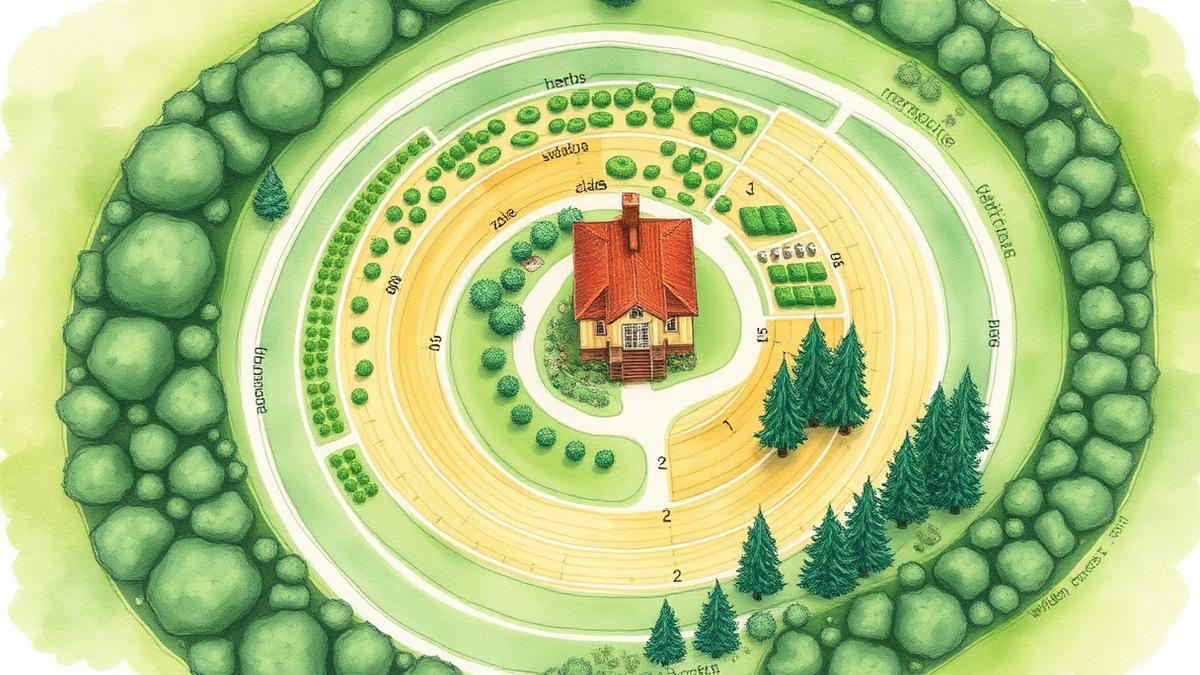
Permaculture Zones According to Mollison: How to Plan Your Property Efficiently
Permaculture Zones According to Bill Mollison – Efficient Property Planning
Permaculture zone planning according to Bill Mollison is one of the most effective tools for saving time, distances and energy on your property. Instead of distributing beds and functions randomly, you arrange them by frequency of use around your home.
The result: You walk less, harvest more, and your garden works with you instead of demanding from you.
The 5 Zones at a Glance
| Zone | Distance | Visit frequency | Typical elements |
|---|---|---|---|
| Zone 0 | House | daily, 24/7 | Living, kitchen, pantry |
| Zone 1 | 0–10 m | several times a day | Herb spiral, raised beds, lettuce, chives |
| Zone 2 | 10–30 m | daily | Vegetable beds, berries, chickens, compost |
| Zone 3 | 30–100 m | weekly | Orchard, potatoes, grain, beehives |
| Zone 4 | 100–500 m | monthly | Firewood, wild fruit, extensive pasture |
| Zone 5 | farther away | rarely / never | Wilderness, observation, nature reserve |
💡 Rule of thumb: What you need daily belongs in Zone 1. What you only visit at harvest time may go in Zone 3 or 4.
Step 1 – Observe Instead of Plan
Before you lay out the first bed: observe your property for 4 weeks.
- Where does water run during heavy rain?
- Where is the sun in the morning, where in the evening?
- Which paths do you use intuitively?
- Where is the wind strongest?
Enter these observations into a simple sketch. This sector analysis is the basis of every good zone plan.
Step 2 – Prioritize Zone 1
Zone 1 decides whether your garden succeeds or fails. Here the rule is:
- ✅ At most 20 steps from the house entrance
- ✅ Visible directly from the kitchen window
- ✅ Only plants that you need at least weekly
- ✅ Paved paths (passable even in the rain)
Top 10 plants for Zone 1: Parsley, chives, lettuce, radishes, spinach, basil, arugula, cut-and-come-again lettuce, spring onions, strawberries.
Step 3 – Zone 2 as Main Production
Zone 2 is your actual self-sufficiency garden: tomatoes, zucchini, beans, cabbage, berry bushes, compost and, ideally, a chicken coop.
💡 Tip: Place the compost heap between Zone 1 and Zone 2 - short distances for kitchen waste, short distances to the bed.
Step 4 – Zone 3 for Large Crops
In Zone 3 grow crops that only need seasonal care: potatoes, pumpkin, corn, fruit trees. A traditional orchard meadow with old varieties or a small apiary is also worthwhile here.
Common Planning Mistakes
| Mistake | Consequence | Solution |
|---|---|---|
| Tomatoes in Zone 3 | walking 100 m daily | move to Zone 1/2 |
| Compost in Zone 4 | does not get filled | close to the kitchen |
| Herbs in the backyard | dry out, forgotten | windowsill / Zone 1 |
| Chickens too close to the house | smell, noise | Zone 2, away from the wind |
Zones + Sectors = Full Effect
While zones depict the frequency of use, sectors describe external influences: sun, wind, water, view, noise. Combine both:
- Sun sector → tomatoes, peppers, dry stone wall
- Wind sector → hedge, privacy screen, windbreak
- Water sector → pond, bog bed, infiltration swales
Conclusion
Permaculture zones are not a rigid scheme, but a thinking tool. Those who arrange their beds by frequency of use save dozens of hours of working time per season and harvest measurably more.
💡 PermaNatura practical tip: Use the permaculture zone function in the bed planner to visually store your zones and to receive planting suggestions automatically suited to the zone.
Frequently Asked Questions About Permaculture Zones
What are permaculture zones? Zones (0–5) arrange beds and functions by frequency of use around the house: what you need daily comes close (Zone 1), what rarely needs care goes farther away (Zones 3–5).
Do I need a lot of space for permaculture zones? No. The zone principle applies just as well to a small garden or balcony – there the zones simply move closer together. What matters is the arrangement by how often you walk to them, not the area.
How do I start with zone planning? First observe your property for four weeks (sun, wind, water, paths) and then lay out Zone 1 right by the house. A step-by-step guide is offered in Permaculture in your own garden.
What is the difference between zones and sectors? Zones depict the frequency of use, sectors the external influences (sun, wind, water). Only the combination of both makes an efficient plan.
What comes after the zones? A logical next step is the multi-layered forest garden, which extends the zone principle upwards.
Further reading: Bill Mollison – Permaculture: A Designers' Manual (1988), Sepp Holzer – Wüste oder Paradies (2010).
Comments (0)
Sign in to comment.
📖 You might also like
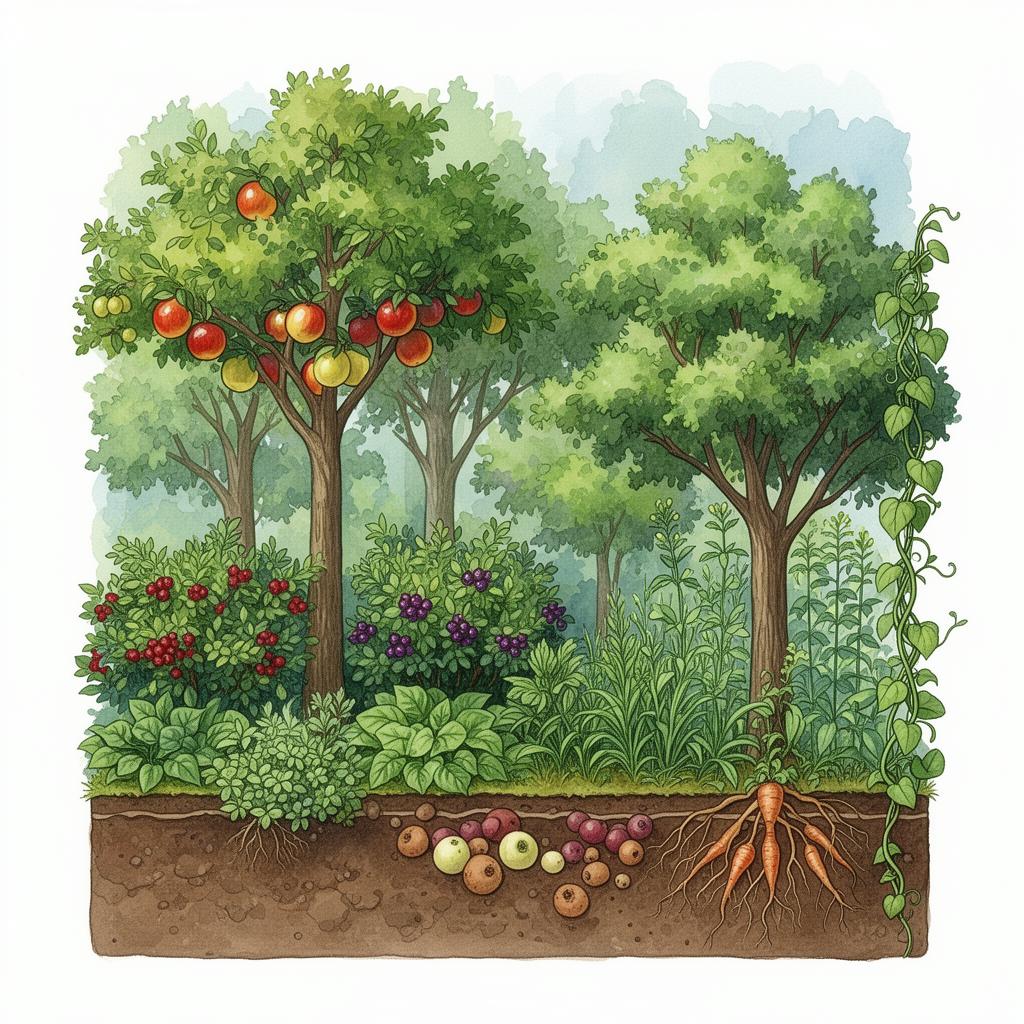
Creating a Forest Garden: Edible Landscapes Based on the Permaculture Principle
A forest garden combines fruit trees, berry bushes, perennials and ground covers into a productive ecosystem. Here is how to establish a food forest in Germany, Austria or Switzerland.
Read more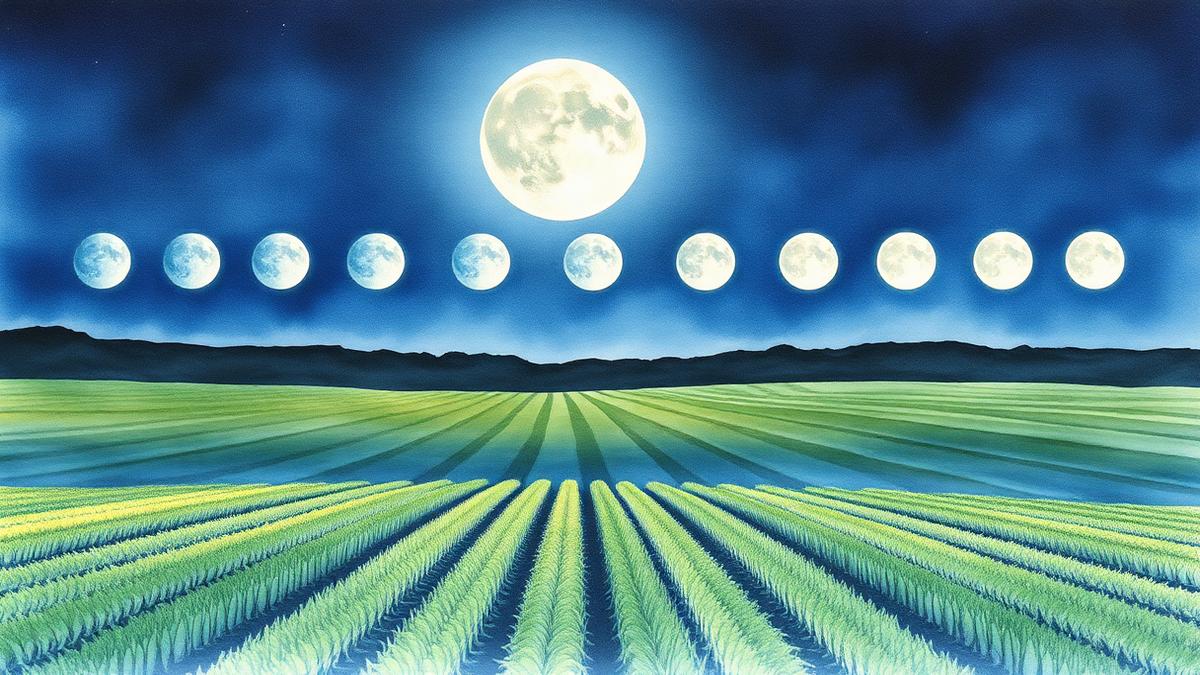
Lunar Calendar in Agriculture: Where Science Meets Tradition
For centuries, farmers have timed sowing and harvesting by the moon. What does science say about it? And how does PermaNatura integrate lunar rhythms into modern farm planning?
Read more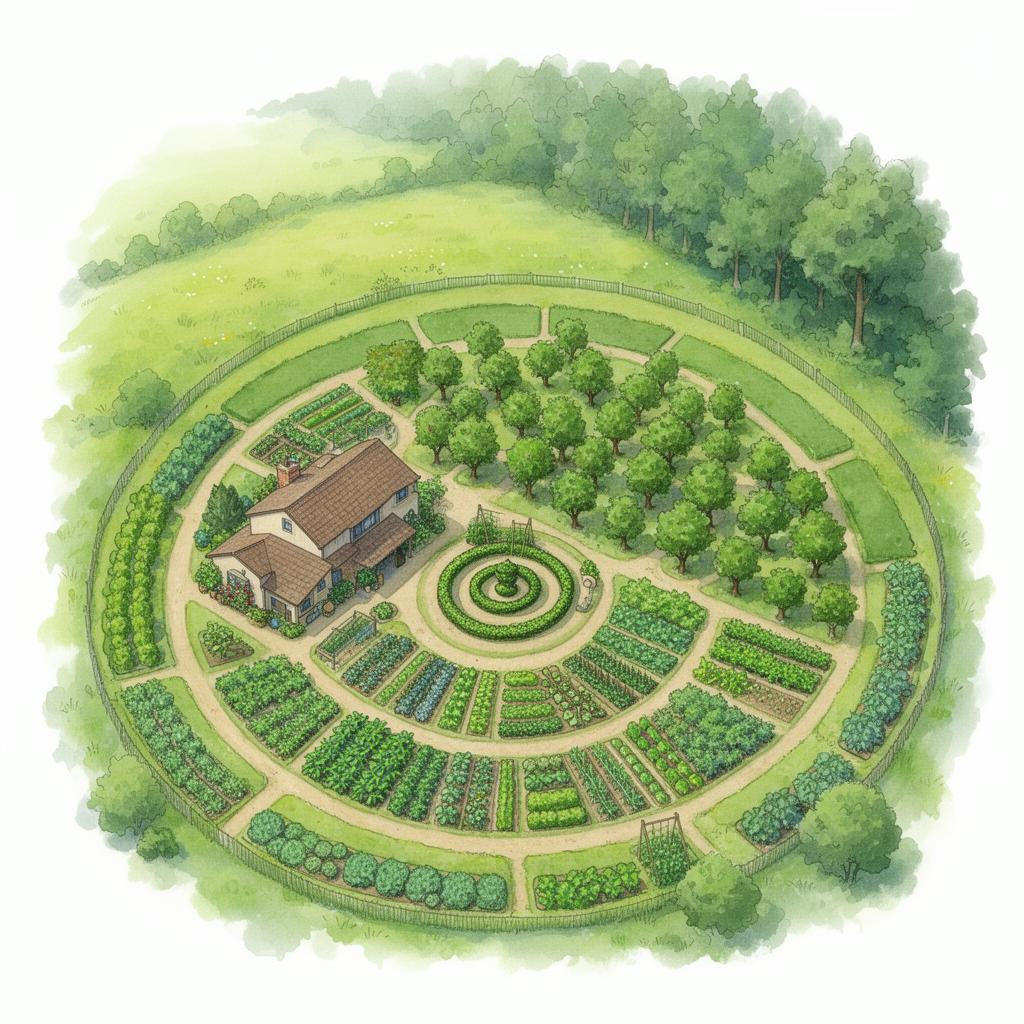
Understanding Permaculture Zones: From Zone 0 to Zone 5 – A Practical Guide
Bill Mollison's zone concept is the foundation of every permaculture design. Learn about the 6 zones and how to apply them to your garden in Germany, Austria or Switzerland.
Read more