
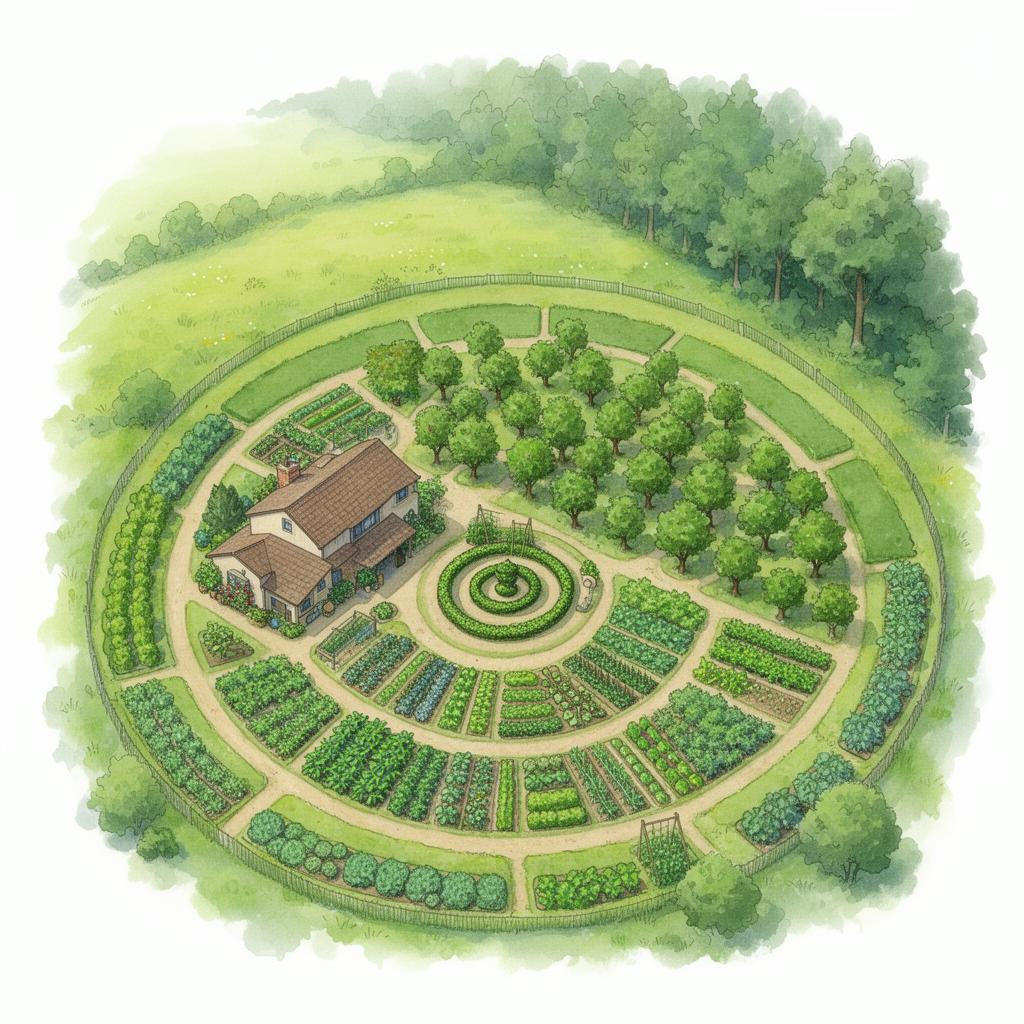
Understanding Permaculture Zones: From Zone 0 to Zone 5 – A Practical Guide
The Zone Model According to Bill Mollison
Bill Mollison, the founder of permaculture, developed a simple yet ingenious planning principle: The more often you need or tend something, the closer it should be to the house. This concept of concentric zones helps you save energy and effort – whether on a 50 m² row-house garden in Düsseldorf or on a hectare of traditional orchard meadow in Appenzell.
The 6 Permaculture Zones in Detail
Zone 0 – The House
Your home is the center of the system. Everything begins here:
- Windowsill herbs: Basil, parsley, chives – whatever you need daily
- Sprouts: Alfalfa, mung beans, radish sprouts on the countertop
- Compost bucket: The bridge between kitchen and garden
DACH tip: In rented apartments in Vienna, Zurich or Hamburg, Zone 0 is often the entire available growing area – and that's enough to get started!
Zone 1 – The Kitchen Garden (visited daily)
The most intensive area, right outside the door:
- Herb spiral with thyme, rosemary, sage, oregano
- Raised beds with lettuce, radishes, cut-and-come-again salad – whatever you harvest daily
- Cold frame for starting seedlings from February (especially important at higher altitudes in the Alps)
PermaNatura integration: In the bed planner you can categorize your Zone 1 beds as "raised bed" or "herb bed" and use the companion planting planner to find optimal neighbors.
Zone 2 – The Main Garden (regularly tended)
This is where crops grow that need attention 2-3 times per week:
- Vegetable beds: Tomatoes, peppers, zucchini, beans
- Berry bushes: Currants, gooseberries, raspberries
- Compost system: 3-chamber system for continuous humus production
- Rainwater collection: Barrels or IBC containers
Zone 3 – Field and Orchard (weekly)
Larger areas with less maintenance-intensive crops:
- Potatoes, squash, corn – the "Three Sisters" of companion planting
- Fruit trees: Apple, pear, plum – favor old DACH varieties!
- Green manure: Phacelia, crimson clover, winter rye for soil improvement
Regional note: In Switzerland and Austria, robust varieties such as 'Boskoop' (apple) or 'Wädenswiler' (pear) are recommended, as they are adapted to the Alpine foothills climate.
Zone 4 – Semi-Wild Zone (monthly)
The transition between productive garden and wilderness:
- Forest garden elements: Hazelnut, elderberry, cornelian cherry
- Wild fruit: Sloe, rosehip, sea buckthorn
- Deadwood hedges as habitat for hedgehogs and wild bees
Zone 5 – Wilderness (observation)
Not cultivated, only observed:
- Wildflower meadow (mowed 1-2x per year)
- Natural pond for amphibians and dragonflies
- Deadwood area as habitat
Planning Zones in PermaNatura
In PermaNatura you can visualize your permaculture zones:
- Create projects per zone (e.g. "Zone 1 – Kitchen Garden", "Zone 2 – Main Garden")
- Assign beds and locate them with GPS coordinates
- Use companion planting recommendations based on zone principles
- Document harvest data to optimize over the years
Permaculture in the DACH Region
The permaculture movement is especially strong in Germany, Austria and Switzerland. The Permaculture Institute Germany, the Permaculture Academy in the Alpine Region and numerous community gardens offer courses and networking. PermaNatura supports you as a digital tool for long-term documentation and planning – ad-free, with data stored in Europe.
Start your zone planning now in PermaNatura. Register for free.
Comments (0)
Sign in to comment.
📖 You might also like
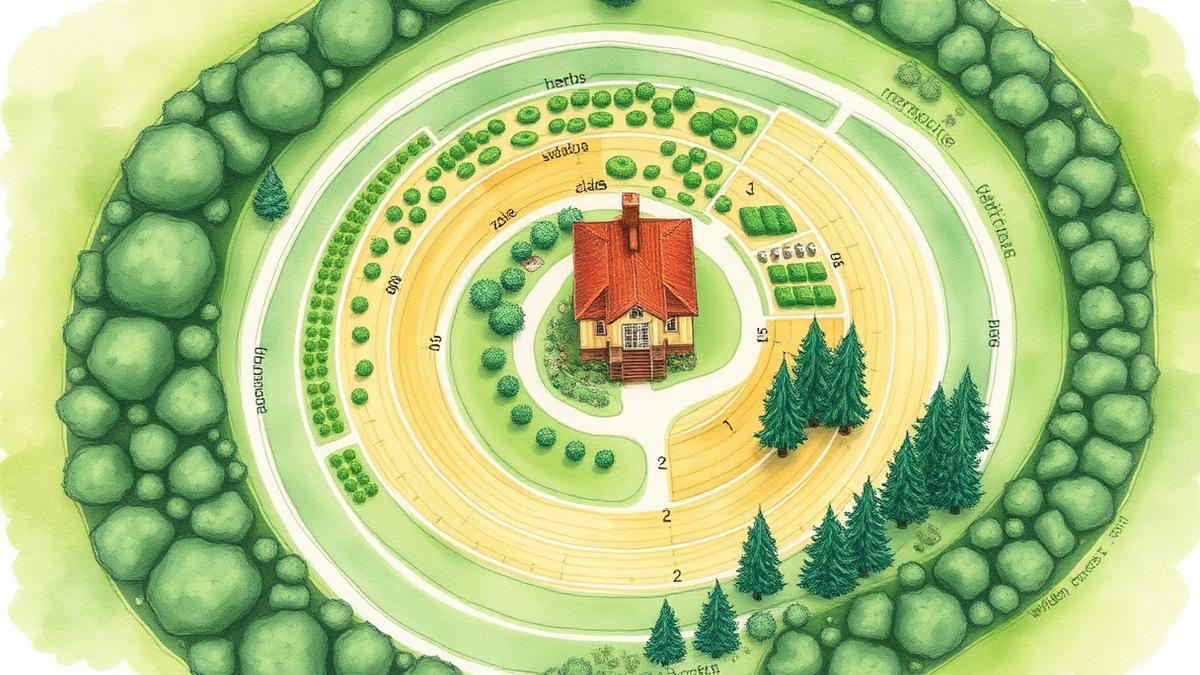
Permaculture Zones According to Mollison: How to Plan Your Property Efficiently
The zone model according to Bill Mollison is the heart of every permaculture plan. Learn how to apply Zone 0 to 5 on your property - from the balcony to the large-scale farm.
Read more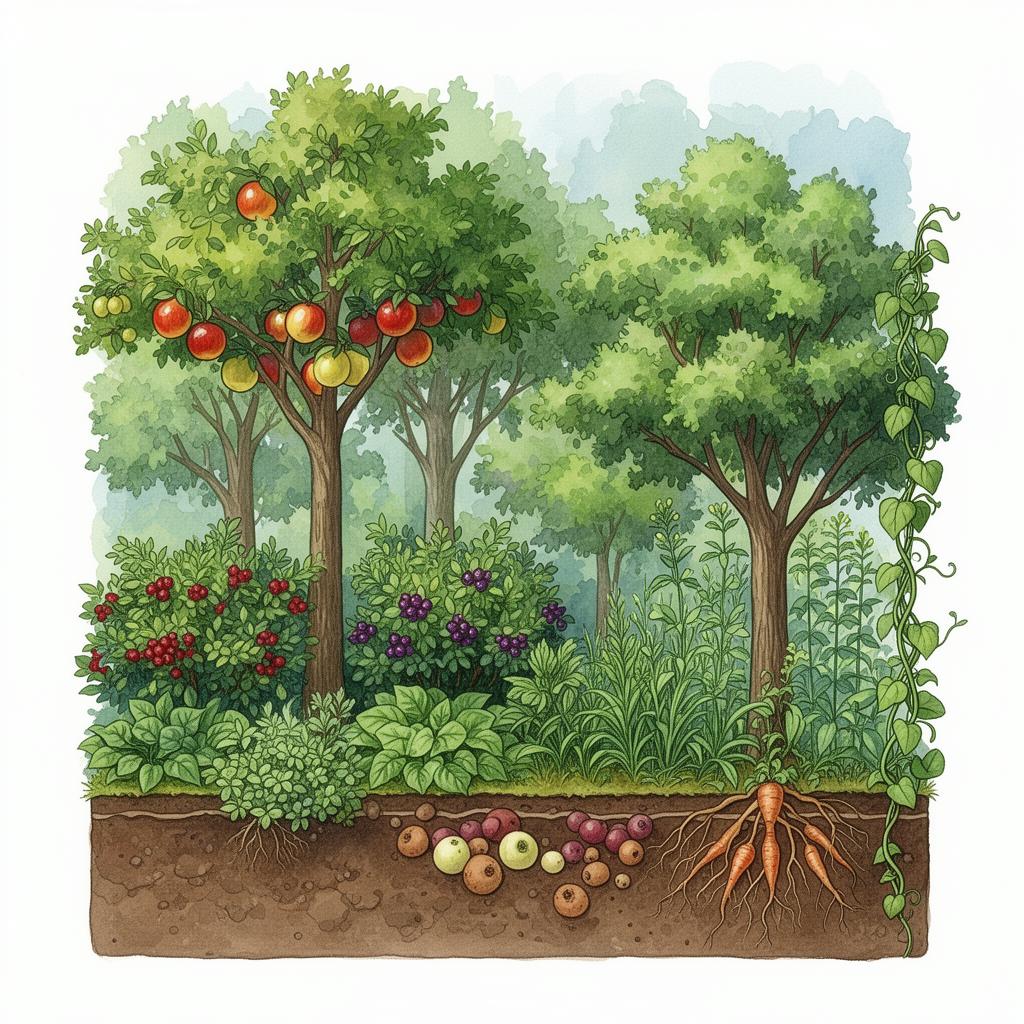
Creating a Forest Garden: Edible Landscapes Based on the Permaculture Principle
A forest garden combines fruit trees, berry bushes, perennials and ground covers into a productive ecosystem. Here is how to establish a food forest in Germany, Austria or Switzerland.
Read more
Lunar Calendar in Agriculture: Where Science Meets Tradition
For centuries, farmers have timed sowing and harvesting by the moon. What does science say about it? And how does PermaNatura integrate lunar rhythms into modern farm planning?
Read more