Creating a Forest Garden: Edible Landscapes Based on the Permaculture Principle
What Is a Forest Garden?
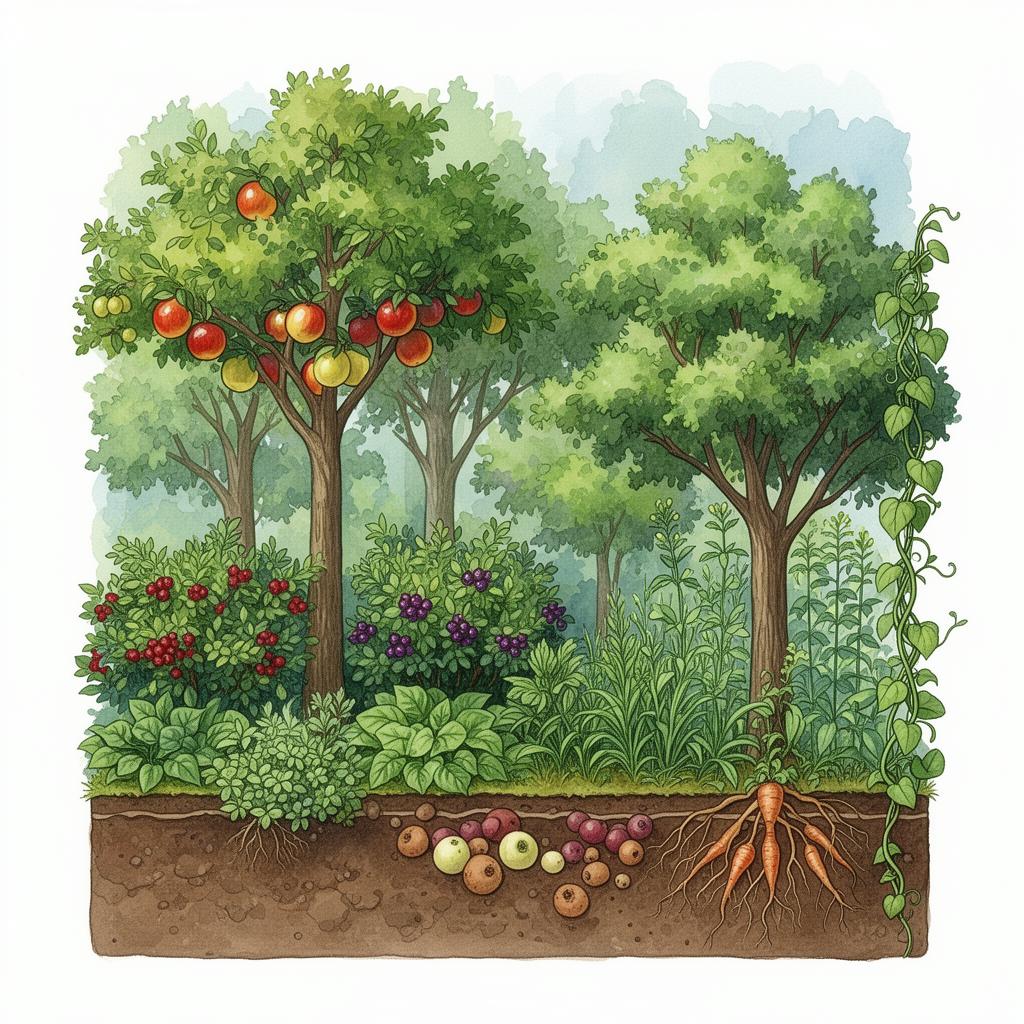
A forest garden (English: food forest) imitates the structure of a natural forest – but every layer produces food. The concept originates from tropical agroforestry and was adapted for temperate climate zones in Europe by permaculture pioneers such as Robert Hart and Martin Crawford.
In the DACH region there are already impressive examples:
- The Waldgarten Bodensee on the Swiss shore
- The Mienbacher Waldgarten-Projekt in Bavaria
- The Permakultur-Hof Bec Hellouin as a model (France, but transferable to the DACH region)
The 7 Layers of the Forest Garden
1. Canopy Layer – 8-15 m
The tallest trees form the roof:
- Walnut (Juglans regia) – classic DACH tree, long-lived
- Sweet chestnut (Castanea sativa) – thrives in wine-growing areas (Palatinate, Wachau, Ticino)
- Service tree (Sorbus domestica) – rare tree, excellent fruit wood
Caution: In small gardens (<200 m²) leave out the canopy layer or replace it with half-standard trees!
2. Understory Layer – 3-8 m
Smaller fruit trees on weak-growing rootstock:
- Apple on M9 or M26 (bush tree, ideal for home gardens)
- Pear on quince A
- Plum and mirabelle – robust and low-maintenance
- Mulberry (Morus) – underrated, but excellent for the DACH climate
Variety tip: Prefer old regional varieties! In Austria: 'Kronprinz Rudolf' (apple). In Switzerland: 'Glockenapfel'. In Germany: 'Kaiser Wilhelm'.
3. Shrub Layer – 1-3 m
The most productive element in the forest garden:
- Currant (red, black, white) – vitamin C bombs
- Gooseberry – robust yields even in partial shade
- Raspberry and blackberry – autumn varieties for a long harvest
- Juneberry (Amelanchier) – decorative AND edible
- Elderberry – flowers for syrup, berries for juice
- Aronia – superfood from your own garden
- Hazelnut – nutrient supplier and windbreak
4. Herbaceous Layer – 0.3-1 m
Perennials that come back every year:
- Wild garlic – in spring, under deciduous trees
- Chives, lovage, tarragon – kitchen herbs
- Rhubarb – robust, productive, undemanding
- Jerusalem artichoke – edible tubers + privacy screen (caution: it spreads!)
- Good King Henry (Chenopodium bonus-henricus) – historic leafy vegetable
5. Ground Cover – 0-0.3 m
Protect the soil and produce at the same time:
- Wild strawberry – charming and delicious
- Creeping bugle – bee-friendly
- White clover – fixes nitrogen
- Winter purslane – winter salad, self-seeding
6. Root Layer
Underground harvest:
- Jerusalem artichoke (see above)
- Horseradish – robust, pungent, healthy
- Garlic – can be perennial (rocambole)
7. Climber Layer
Uses vertical space:
- Grapevine – in sheltered locations of the DACH region
- Kiwi (Actinidia arguta) – mini kiwi, hardy down to -25°C!
- Hops – for tea or beer brewing
Establishing a Forest Garden in the DACH Region
Choosing the Site
- Ideal: south- to southwest-facing slope with wind protection
- Soil: deep, humus-rich, not waterlogged
- Area: minimum 100 m² for a meaningful system, ideally from 300 m²
- Climate zone: USDA 6-8 (covers almost the entire DACH region)
Creating a Planting Plan
- Inventory: existing trees, shade, soil (use the soil analysis module in PermaNatura)
- Position the canopy layer: keep the south side clear, large trees to the north
- Group the shrubs: in east-west rows for even light
- Underplant perennials: in the partial shade of the shrubs
- Close with ground cover: fill gaps with strawberries and clover
Timeline
| Phase | Period | Action |
|---|---|---|
| Preparation | Autumn Year 0 | Mulch the soil, apply compost, sow green manure |
| Planting trees | Autumn/Winter Year 1 | Plant fruit and nut trees (bare-root, cheaper!) |
| Planting shrubs | Spring Year 1 | Plant berry bushes |
| Underplanting | Year 2-3 | Gradually add perennials and ground covers |
| Full production | From Year 5-7 | All layers established, increasing harvest |
Costs
A forest garden on 200 m² costs 400-800 € initially (trees, shrubs, perennials at regional nurseries). From year 5 it delivers 50-150 kg of fruit, berries and herbs annually – with minimal maintenance effort.
Documenting Your Forest Garden in PermaNatura
- Create a permaculture project with the category "Forest Garden"
- Record each layer as its own bed
- Use the harvest documentation to track productivity over the years
- The AI advice helps with questions about location, varieties and care
Conclusion
A forest garden is the ultimate permaculture system: once established, it produces food for decades with minimal effort. It promotes biodiversity, sequesters CO₂ and delivers healthy fruit right at your doorstep. Germany, Austria and Switzerland offer ideal conditions for it – all you need is a little patience and a good plan.
Plan your forest garden with PermaNatura. Get started now.
Comments (0)
Sign in to comment.
📖 You might also like
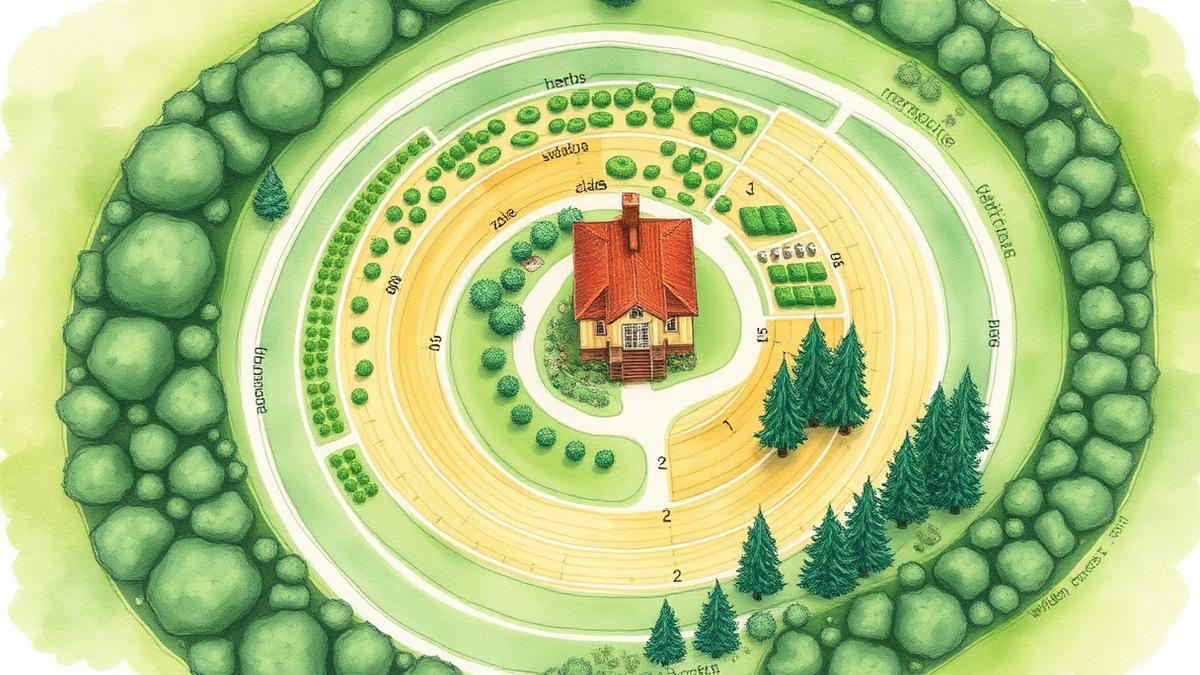
Permaculture Zones According to Mollison: How to Plan Your Property Efficiently
The zone model according to Bill Mollison is the heart of every permaculture plan. Learn how to apply Zone 0 to 5 on your property - from the balcony to the large-scale farm.
Read more
Lunar Calendar in Agriculture: Where Science Meets Tradition
For centuries, farmers have timed sowing and harvesting by the moon. What does science say about it? And how does PermaNatura integrate lunar rhythms into modern farm planning?
Read more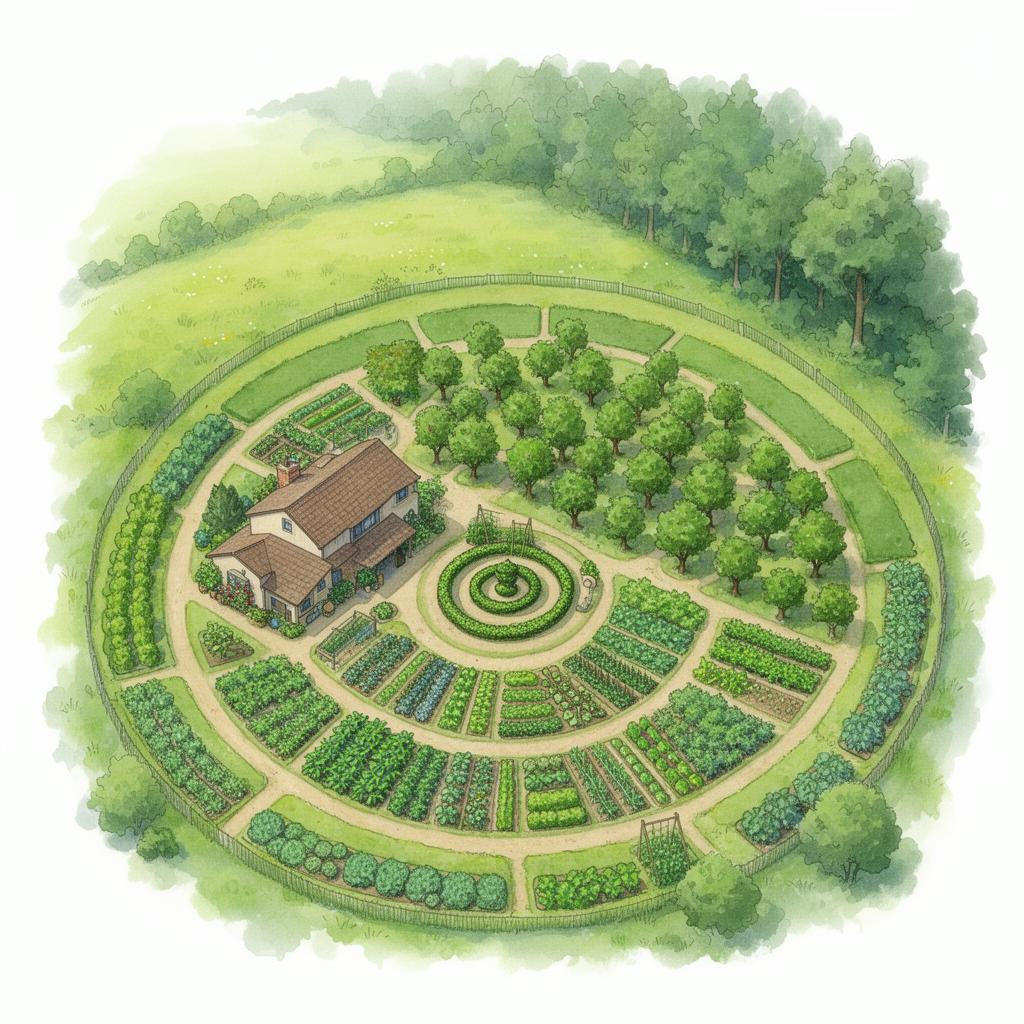
Understanding Permaculture Zones: From Zone 0 to Zone 5 – A Practical Guide
Bill Mollison's zone concept is the foundation of every permaculture design. Learn about the 6 zones and how to apply them to your garden in Germany, Austria or Switzerland.
Read more