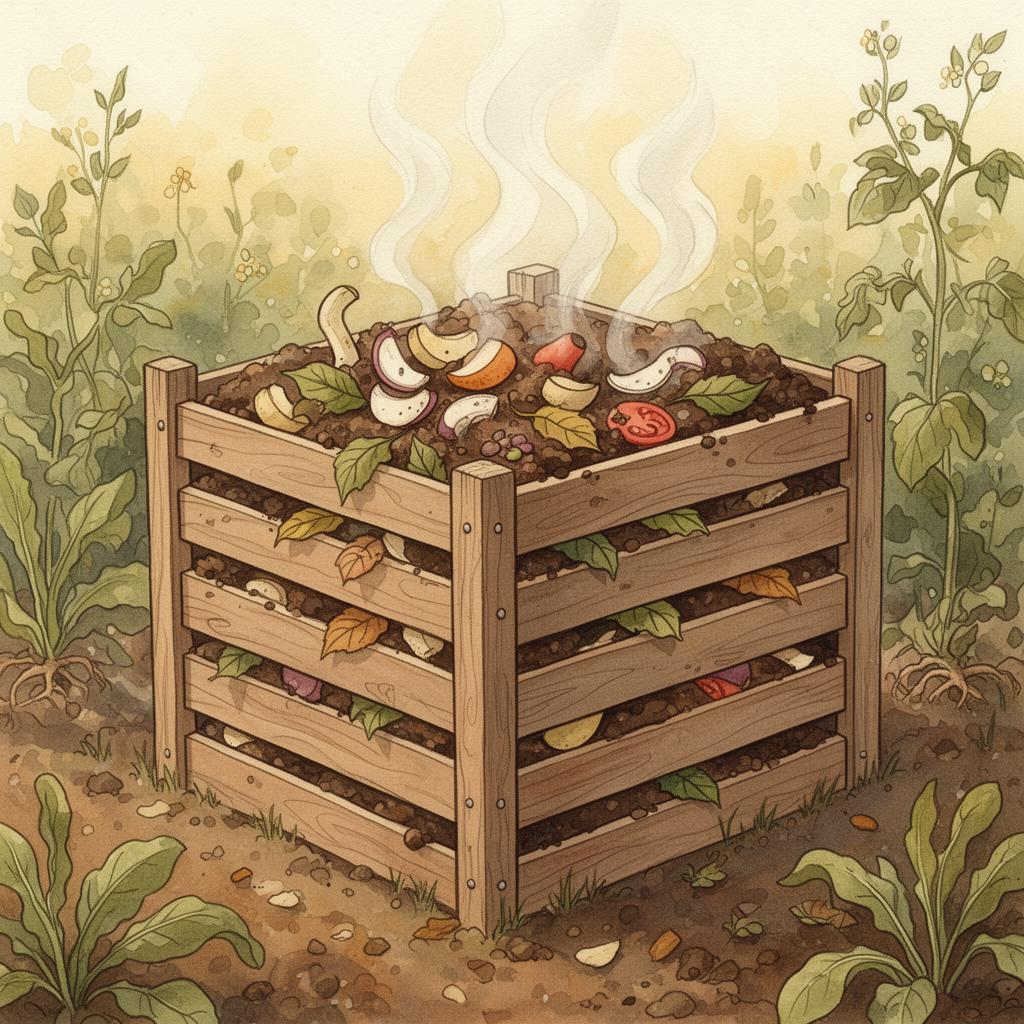
The farm cycle in autumn: pasture, animals, manure
Autumn Journey 2026 · Part 5 of 5
On a living farm, autumn is not an end but a handover. The animals come off the pasture, the sward goes into winter, and the manure now building up in the barn becomes next year's fertility. This is where you see what biodynamic farming calls the "farm organism": animals, soil and plants carry each other.
1. The pasture: fist-high into winter
The most important rule for autumn is surprisingly simple. The North Rhine-Westphalia Chamber of Agriculture (Haus Riswick) gives a rule of thumb: a "fist-high sward" before winter sets in. Why? Swards cut or grazed too low and too late are at risk of frost and winter damage, and they start later in spring.
According to Riswick, pastures with a lot of leftover growth and rank patches should be grazed again or mulched before winter. And: too little grazing area or too high a stocking density can damage the sward for good.
Takeaway: better to close a pasture a little early than to let it be "nibbled down" into winter.
2. The animals: adjust the feed
Autumn grass is different from summer grass. Riswick describes it as low in structure, high in protein and often wet – dew-fresh growth with a lot of white clover can quickly cause bloat in ruminants. That's why autumn grazing needs balancing with structured feed such as hay, structured silage or feed straw.
If you watch your animals closely – dung consistency, eating behaviour, rumination – you can often see whether the ration fits before it becomes a problem. When in doubt, involve your vet.
3. The manure: from barn back to field
With the animals indoors, the manure heap grows – and with it a treasure. Well-prepared manure brings organic matter and nutrients back to where the feed grew. On biodynamic farms, the six compost preparations from Part 4 are added.
Organic farms have a clear upper limit here: no more than 170 kg of nitrogen from livestock manure per hectare per year. How much your herds actually contribute depends on species and numbers.
4. Your farm as a cycle – in PermaNatura
Under Farm & animals you see your farm exactly like that, as a cycle: animals → farm manure → compost & preparations → soil → pasture & fodder → animals.
- Grazing and rest days: every herd shows how long it has been on its pasture – and which pasture has rested longest. One tap and the herd moves; the grazing is recorded in the field records automatically.
- Nitrogen balance: PermaNatura calculates the nitrogen per hectare from your herds and compares it with the organic limit of 170 kg – based on the official table of the EU organic regulation.
- Your own manure first: when you record fertilising or compost, the app suggests manure from your own species – "cattle manure from the farm" instead of a free-text search.
- Tasks in the calendar: "Move to new pasture", "Muck out the barn" and "Turn the manure heap" are there as templates as soon as your farm keeps animals.
The Autumn Journey 2026
- Stop for one minute: how to read your autumn garden
- Sweet chestnut or horse chestnut? The check before you gather
- One tree, many cycles: what the sweet chestnut teaches about permaculture
- Biodynamic autumn: what happens inside the cow horn
- The farm cycle in autumn: pasture, animals, manure (you are here)
Frequently asked questions
When should the last grazing be?
There is no fixed rule – what matters is a fist-high sward before winter, depending on weather, site and growth.
How long should a pasture rest?
That depends on season, soil and weather. PermaNatura shows you the actual rest days – the decision stays with you.
As of 20 October 2026. Grazing and feeding notes follow the NRW Chamber of Agriculture (Haus Riswick). The 170 kg limit follows the EU organic regulation; agree specific amounts and dates with your own advisor.
Comments (0)
Sign in to comment.
📖 You might also like
Biodynamic autumn: what happens inside the cow horn
Cow horns full of manure winter underground, six medicinal plants go into the compost – and what science says. Part 4 of the Autumn Journey.
Read more
Stop for one minute: how to read your autumn garden
Four small stations – light, herbs, path, wind – and one habit that helps you understand your garden better every year. Part 1 of the Autumn Journey.
Read more
One tree, many cycles: the sweet chestnut and permaculture
Fruit, leaves, soil and the story of the "bread tree": how one tree becomes a place of learning for families. Part 3 of the Autumn Journey.
Read more