One tree, many cycles: the sweet chestnut and permaculture
Autumn Journey 2026 · Part 3 of 5
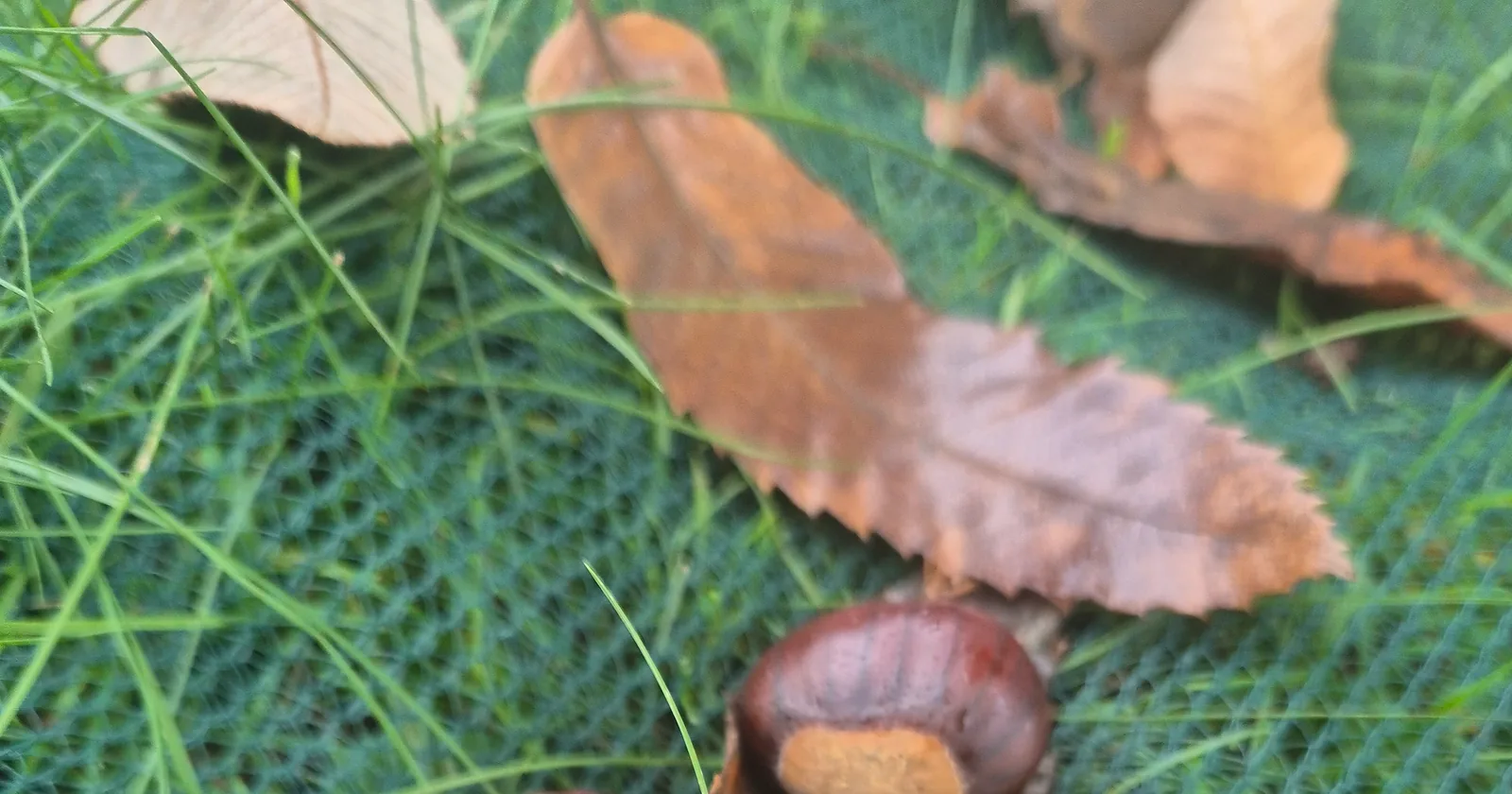
A chestnut in your hand is three things at once: a seed that could become a tree, a possible meal – and a piece of history. Beneath it lie leaves that become soil. Above it, a crown that has been growing for decades. Visit this place several times and you experience permaculture in miniature: nothing is lost, everything becomes part of the next cycle.
The best part: you don't need your own chestnut tree. A tree you can reach, repeated visits and good questions are enough.
The tree is bigger than the harvest
The sweet chestnut (Castanea sativa) can grow into a large, long-lived tree. It needs warmth, suitable soil and enough water – so it doesn't suit every garden. The Bavarian State Institute of Forestry (LWF) gives a sound overview.
So the most important permaculture question is not "Where do we plant one?" but: Which existing tree can we get to know – and what do we learn from it for our own place?
The "bread tree" of the Alps
In parts of the southern Alps the sweet chestnut was a staple food for centuries – hence its name, the "bread tree". The LWF tells this cultural history. It shows how closely food and landscape were once connected – it is not a dietary recommendation for today.
A prompt for your group: Which foods do you connect with autumn? Anyone who wants to can share a family memory. Nobody needs to know a tradition – listening is connection too.
Two paths: fruit and leaf
Part of the fruit is used after certain identification; the rest stays for animals and seedlings. The leaves take another path: they become humus. Chestnut leaves are tough and break down slowly – the Royal Horticultural Society recommends shredding such leaves so they rot faster in the leaf pile.
Mini project: Two labelled leaf containers – one with whole leaves, one with shredded. Same place, same conditions, one photo a month. Not a scientific experiment, but an observation that stays with you. More ways to use autumn leaves: From fallen leaves to better soil.
A learning journey for every age
| Who | Task |
|---|---|
| Children with an adult | Describe colours, shapes, surfaces – never taste the unknown |
| Teenagers | Ask one question, compare two sources, separate observation from assumption |
| Adults & garden groups | Decide the next care or documentation step together |
| Schools & organisations | Agree responsibilities, photo consent and safe handling beforehand |
A lovely finish is a small exhibition: one photo, one drawing, one question, one change. No competition – those who don't like writing can draw or tell.
Your next step
Choose a tree today, note one observation and make a date with it for a second visit. In PermaNatura you link place and observation through a project and the garden journal. Find more design ideas under Permaculture.
The Autumn Journey 2026
- Stop for one minute: how to read your autumn garden
- Sweet chestnut or horse chestnut? The check before you gather
- One tree, many cycles: what the sweet chestnut teaches about permaculture (you are here)
- Biodynamic autumn: what happens inside the cow horn
- The farm cycle in autumn: pasture, animals, manure
Frequently asked questions
Does an education project need its own chestnut tree?
No. A reachable place with permitted access is enough to start.
Does a photo prove an ecological benefit?
No. It documents a moment. Impact, species identification and harvest amounts need their own evidence.
As of 20 October 2026. Cover photo: our own. Cultural history, learning ideas and natural-history statements are kept separate. Horse chestnuts are poisonous.
Comments (0)
Sign in to comment.
📖 You might also like
Stop for one minute: how to read your autumn garden
Four small stations – light, herbs, path, wind – and one habit that helps you understand your garden better every year. Part 1 of the Autumn Journey.
Read more
The farm cycle in autumn: pasture, animals, manure
When the animals come off the pasture: protect the sward, adjust the feed, turn manure into fertility. Part 5 of the Autumn Journey.
Read more
Biodynamic autumn: what happens inside the cow horn
Cow horns full of manure winter underground, six medicinal plants go into the compost – and what science says. Part 4 of the Autumn Journey.
Read more